
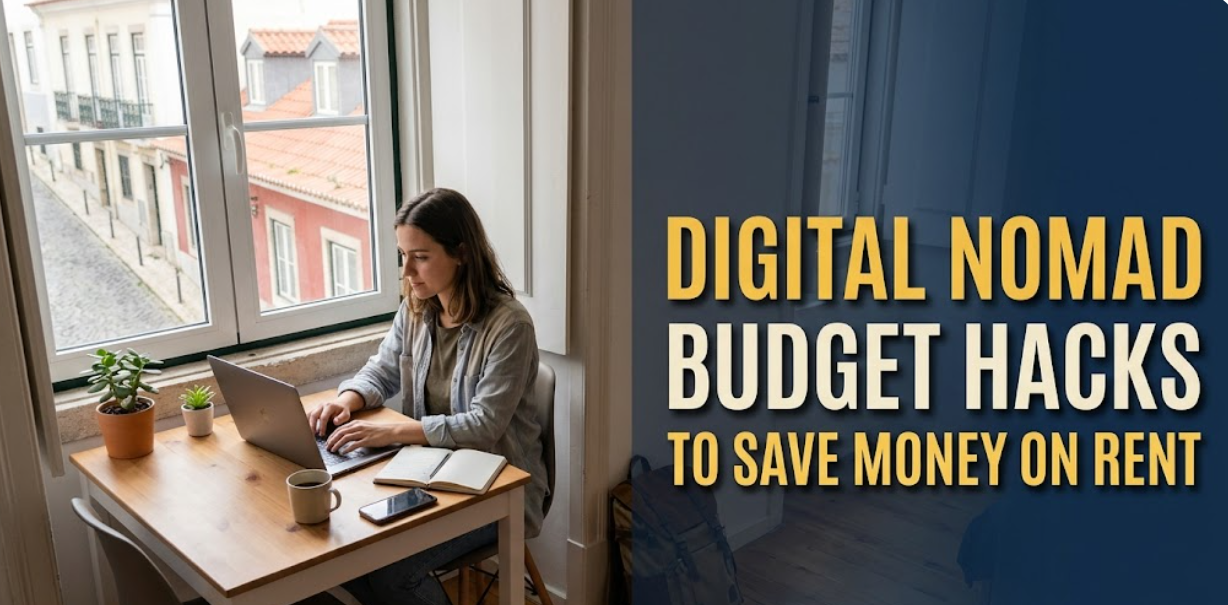
The silver lining is that thousands of digital nomads have cracked the code on housing prices. They’re not just getting by; they’re thriving — spending far less on rent than most people pay for a one-bedroom apartment back home.
This guide explains 8 legit, proven digital nomad budget hacks that can really reduce your monthly housing costs. Whether you’re a beginner or just trying to save some coin as a veteran nomad, this all works.
Why Rent Takes the Biggest Bite Out of Your Budget as a Digital Nomad
Before we get into the tricks, let’s see the problem clearly.
Rent averages 30% to 50% of monthly expenses for digital nomads. That’s huge. And if you’re paying Western prices while working remotely, it might as well be like living at home.
The savviest nomads reverse this narrative. They approach housing like a puzzle — and every trick below is a piece in that puzzle.
Tip #1 — Go Where the Dollar (or Euro) Goes Further
The ultimate trick of the digital nomad budget trade is geographic arbitrage.
In simple terms, you receive money in a stronger currency (such as USD or EUR) and spend it in a weaker currency. The discrepancy in buying power is astounding.
How this plays out in real life
In Chiang Mai, Thailand, a good private room will run you about $200–$350 per month. A room of that same quality in Berlin runs $900–$1,400. Both have fast WiFi and strong nomad communities. Only one is easy on the wallet.
Geographic arbitrage alone can lower your rent by 60–80%. That’s not a small tweak — that’s a lifestyle upgrade.
Most affordable nomad cities right now
- Southeast Asia: Chiang Mai, Ho Chi Minh City, Penang
- Eastern Europe: Tbilisi (Georgia), Plovdiv (Bulgaria), Kraków (Poland)
- Latin America: Medellín (Colombia), Oaxaca (Mexico), Curitiba (Brazil)
Tip #2 — Book Long-Term and Negotiate
Short-term rentals bleed money. Airbnb and hotel prices are set for tourists — not residents.
The solution: stay longer, pay less.
The long-term discount formula
Most landlords and property managers will drastically lower rates for guests willing to sign on for 30, 60, or 90 days. This is especially true in nomad hotspots where it’s a competitive market.
| Booking duration | Typical discount off nightly rate |
|---|---|
| 1–6 nights | 0% (full price) |
| 7–27 nights | 10–20% off |
| 28–89 nights | 25–45% off |
| 90+ nights | 40–60% off |
A $60/night room turns into $900–$1,100/month on a 90-day deal. Without negotiating, you’d pay $1,800.
How to negotiate like a pro
Don’t take the listed price as gospel. Message hosts directly and say something simple like:
“Hi, I plan to stay for 60 days as a remote worker. Would you consider a monthly price?”
Most hosts say yes. The worst they can say is no. For more strategies like this, visit Digital Nomad Budget — a resource packed with practical money-saving advice for location-independent workers.
Tip #3 — House Sitting: The Greatest Free Rent Hack
Yes, entirely rent-free exists — and it’s perfectly above board.

House sitting is when you take care of someone’s home (and often their pets) while they travel. In return, you live there for free.
Where to find house sits
- TrustedHousesitters — the largest platform in the world
- HouseCarers — well established in Australia and New Zealand
- Nomador — popular in Europe
Membership usually costs $100–$150 a year. If you score even one free month in a given city, it’s often hundreds of dollars in savings.
What house sitters actually do
The work is light. You arrive, maintain the home, water the plants, and take care of the dog or cat. No salary — but also no rent.
This hack works best when you’re flexible with your schedule and can easily change locations.
Tip #4 — Coliving Spaces: Community and Cost Savings Together
Coliving is hostel 2.0 — but instead of backpackers, it’s for remote workers. You get a private room, shared community space, high-speed WiFi, and a community of fellow nomads. It typically costs 20–30% less than comparable private accommodation.
Why coliving saves you money
When you rent your own apartment, everything comes out of your pocket: furniture, WiFi setup, utilities, kitchen supplies. Coliving bundles all of that together. Here’s what’s typically included:
- High-speed WiFi (usually gigabit)
- Utilities and water
- Shared workspace or dedicated desk
- Cleaning services (weekly or biweekly)
- Community events and networking
Best coliving networks for nomads
- Selina — 100+ locations worldwide, fun and social
- Outside — focused on quality and productivity
- Sun and Co — boutique destinations in Europe
- Anyplace — monthly furnished rooms with WiFi guarantees
Tip #5 — Home Exchange Programs Reduce Your Cost to $0
Home exchange is exactly what it sounds like. You swap homes with another person for a fixed period — they stay in your place while you stay in theirs.
This works best for nomads who have a home base somewhere and travel several months of the year.
How home exchange works
- List your home on an exchange platform
- Browse homes in your destination of interest
- Propose a swap — simultaneous or non-simultaneous
- Agree on dates and house rules
- Travel for free (or nearly free)
Nomads particularly like non-simultaneous exchanges. You don’t have to travel at the same time — you accumulate credits by hosting and spend them on stays with others.
Top home exchange platforms
- HomeExchange — the largest platform, with 400,000+ homes listed
- LoveHomeSwap — best in Europe and the UK
- GuestToGuest — for the budget-conscious traveler
Tip #6 — Be a Property Caretaker or Live-In Manager
This is an underused gem in the digital nomad budgeting playbook.
Some property owners — especially those with vacation rentals, small hotels, or remote estates — need someone to oversee things in person: addressing minor issues, checking in guests, and making sure everything runs smoothly.
In exchange? Free or heavily discounted rent.
Where to find these opportunities
- The Caretaker Gazette — a specialized job board for caretaker positions
- WorkAway — a broader platform with accommodation-for-assistance arrangements
- HelpX — similar to WorkAway, popular in rural and farm environments
- Expat Facebook groups in your target country
You typically work 4–6 hours a day in exchange for a place to stay. If your remote job is your primary income and only requires a handful of hours per week, this arrangement is nearly perfect.
What skills help you get hired
Property owners want someone responsible, handy, and trustworthy. Basic handyman skills, fluency in the local language, or experience running short-term rentals are all advantages.
Tip #7 — Use Slow Travel to Avoid Relocation Fees

Moving constantly is expensive. Each time you jump to a new city, you pay:
- First month’s rent (often plus a deposit)
- Short-term rates until you find permanent housing
- Moving fees or baggage overages
- Cost of new SIM cards, transit cards, and other setup expenses
The solution? Slow down.
What slow travel does to your budget
Rather than visiting a dozen cities over the course of a year, visit three or four — staying 2–3 months in each place. This gives you time to:
- Find the cheapest long-term rental in your area
- Identify which neighbourhoods are tourist traps
- Build relationships with landlords who offer discounts for repeat guests
- Avoid the constant “settling in” tax of moving too fast
Slow travel isn’t boring. It’s just smarter with money.
Tip #8 — Stack Multiple Savings Strategies
The number one secret most seasoned nomads know? These tricks are even more effective when used together. Two or three strategies stacked is where the real savings happen.
Real-world stacking examples
Stack A: Slow travel (Tip #7) + Long-term negotiated rate (Tip #2) + Budget city (Tip #1)
Result: A nomad living in Tbilisi paying $280/month for a fully furnished apartment including utilities.
Stack B: Coliving space (Tip #4) + Slow travel (Tip #7)
Result: A nomad in Bali for $600/month all-inclusive, while expanding a network of remote workers.
Stack C: House sitting (Tip #3) + Geographic arbitrage (Tip #1)
Result: Three months of free rent in a villa in Portugal — $3,000+ saved at once.
A Simple Month-by-Month Budget Framework
A realistic monthly budget for a nomad using these tricks in a low-cost area:
| Expense category | No tricks | Tricks applied |
|---|---|---|
| Rent / housing | $1,200 | $350 |
| Coworking (if applicable) | $200 | $0 (included in coliving) |
| Utilities / WiFi | $80 | $0 (included) |
| Food | $500 | $350 |
| Transport | $200 | $200 |
| Health insurance | $150 | $150 |
| Entertainment | $200 | $200 |
| Total | ~$2,530 | ~$1,250 |
That’s roughly a $1,280 monthly difference — coming to over $15,000 in a year, simply by taking a more strategic approach to where and how you rent.
Avoid These Mistakes That Destroy Your Rent Savings
Even well-intentioned nomads fall for these. Watch out:
- Booking too briefly. Any stay shorter than a month means tourist rates. Aim for 30+ days.
- Avoiding negotiation. Many nomads feel awkward asking for a discount. Don’t. Landlords in nomad-friendly cities expect it.
- Picking the wrong neighbourhood. Tourist areas charge tourist prices. Moving just 10–15 minutes from the centre can reduce rent by 30–40%.
- Moving too fast. After 2–3 weeks, any long-term discount benefits are wiped out.
- Not vetting coliving spaces. Not all coliving is created equal. Read reviews, check WiFi speeds, and ask about noise before committing to a month.
How to Start Using These Tricks Today
You don’t have to change your whole life at once. Start small.
- If you’re already nomadic, ask for a discount on your next rental. Fifteen percent off is still money in your pocket.
- If this is your first foray into nomad living, start by populating your destination list with affordable cities. Get the foundation right.
- If you have a home base, consider home exchanges or caretaker positions for your next long trip.
Every trick you apply compounds. The savings add up quickly.
Frequently Asked Questions
Do I need a long travel history to negotiate rent discounts?
No. Anyone can request a long-term discount. All you need is polite, professional communication and the ability to commit to 30+ days.
Is house sitting safe?
Yes, so long as you use the right platforms, such as TrustedHousesitters, which verifies both homeowners and sitters. Thousands of nomads house sit safely every year.
Are coliving spaces an option for families?
Most coliving spaces are geared toward single travelers or couples. If you’re traveling with kids, look into family-friendly home exchange programs or negotiate directly with landlords for furnished family apartments.
What is the most effective way to cut rent as a new nomad?
Start with geographic arbitrage. Choose a destination where your income currency has strong purchasing power. Even crossing from Western to Eastern Europe can cut rent in half overnight.
How do I find caretaker roles without connections?
Start with The Caretaker Gazette and WorkAway. Search Facebook expat groups for your target country. Check weekly — listings come up regularly and go fast.
Is slow travel boring?
Not at all. Many nomads who practice slow travel say they actually experience more. You discover hidden places, build real friendships, and stop burning mental energy on constant logistics.
Can I work remotely while house sitting?
Absolutely. House sitting is a popular arrangement for remote workers. The peaceful, home-like environment is frequently better than a coffee shop or noisy hostel — and many sitters actively filter for homes with fast WiFi.
What is the single best trick to cut rent as a digital nomad?
Geographic arbitrage combined with long-term negotiation. Relocate to a low-cost city, lock in for 60–90 days, and request a monthly rate. Those two steps alone can cut your rent by 70% or more compared with renting short-term in a high-cost city.
Wrapping It All Up
Rent isn’t the nemesis of the nomadic lifestyle.
With the right digital nomad budget hacks, housing is an adjustable line item in your budget — not a financial ceiling that dictates where you go and how long you can stay.
The eight strategies in this guide — geographic arbitrage, long-term negotiations, house sitting, coliving, home exchange, caretaking, slow travel, and stacking — have enabled thousands of nomads to travel more while spending less.
Start with one. Get comfortable. Then add another.
Soon enough, you’ll be the nomad others come to for advice — the one who somehow manages to live beautifully on half what everyone else pays.
Got a rent-saving trick that works for you? The best nomad knowledge spreads by word of mouth — share what works.