So you want to work from anywhere in the world — sipping coffee in Lisbon, coding from a Bali café, writing reports overlooking the mountains in Chiang Mai. Sounds amazing, right?
But here’s where many travel influencers gloss over: money doesn’t last long without a plan.
The good news? A digital nomad budget doesn’t need to equal unpleasant hostels or hunger. It means being savvy — familiar with the hacks that seasoned nomads employ to make every dollar go farther than most people ever believed possible.
Here’s a breakdown of 8 real, lesser-known digital nomad budget strategies. These are not your standard “cook your own food” tips. These are the ideas that really make a difference.
Today I want to talk about the budget plan needed for your digital nomad journey, and why most of what’s out there is just bad advice.
Much of the budget travel guidance out there is broad and general. “Book flights early.” “Use a budget airline.” Good for a two-week vacation. But digital nomads are on the road for months or years.
Your expenses are different. You need stable internet. You need a visa. You need a place to work, not just sleep. You want health insurance that works for you in 30 countries.
That changes everything.
The below 8 strategies are designed for the true digital nomad lifestyle — not a holiday.
1 Your Money Hack Is All About Slow Travel
Here’s a reality that most new nomads discover the hard way: constant travel is costly.
Each time you change your city, there’s a cost of transport, rent and lost time to settle down. You also pay tourist prices because you don’t yet know where the cheap local joints are.
Slow travel solves all of this.
Your budget looks totally different when you stay in one place for 3–6 weeks instead of the usual 3–4 days.
Here’s why it works:
- When a space is available monthly, it costs 40–60% less than renting it nightly
- You discover local markets, inexpensive eateries and lower-priced services
- You spend less time (and money) travelling
- You can complete more tasks, and therefore make more money
The math of the digital nomad budget is simple: An Airbnb at $50/night for 30 nights = $1,500. The same monthly apartment = $600–$900 at most Southeast Asia or Eastern Europe destinations.
By simply slowing down, that’s $600–$900 saved a month.
The Pro’s Guide to Finding Monthly Rentals
Don’t try to stay on Airbnb for a month — prices are still too high. Instead:
- Facebook Groups: Search “[City name] apartments for expats” — landlords post directly, no middleman fees
- Direct listings: Idealista (Europe), Dot Property (Southeast Asia), Craigslist (Latin America)
- Arrive first, then rent: Spend 3–5 nights in a cheap guesthouse while you explore the area in person
2 The Currency Edge in Low-Cost Countries
This is a key digital nomad budget hack that many fail to capitalise on.
If you’re earning in USD, GBP or EUR and spending in Thai Baht, Georgian Lari or Mexican Peso — you are already winning. But the strategy is more than just “go somewhere cheap.”
Currency stacking refers to destinations where your income travels farthest and the cost of living hasn’t yet risen to match tourist demand.
The Sweet Spot: New Nomad Hubs Are Emerging
There are still cities that are off the radar — high-speed internet, excellent coffee shops and a low cost of living, but not yet “discovered” by the crowds.
Examples current as of 2025–2026:
| Destination | Monthly Budget | Internet Speed | Nomad Maturity |
|---|---|---|---|
| Tbilisi, Georgia | $900–$1,200 | 80–150 Mbps | Medium |
| Medellín, Colombia | $1,000–$1,400 | 50–100 Mbps | High |
| Plovdiv, Bulgaria | $800–$1,100 | 100–200 Mbps | Low |
| Kotor, Montenegro | $900–$1,300 | 50–80 Mbps | Low |
| Iași, Romania | $750–$1,000 | 150–250 Mbps | Low |
These numbers change. Once a city goes viral on nomad forums, prices follow. Move early.
3 Use Co-Living Spaces to Save on Two Bills at Once
Save on the extra cost of accommodation and workspace. Co-living spaces make all of that distinction disappear.
A co-living space is where you sleep and work. Think: your own room, shared kitchen, fast Wi-Fi and a coworking area all for one monthly fee.
Here’s why it beats a standard apartment + café setup:
- You pay one price, not two
- No unexpected café Wi-Fi dropouts mid-client call
- Built-in community of other remote workers (which is worth its weight in gold for mental health)
- Often includes utilities and cleaning
What Co-Living Actually Costs
In Bali, well-known co-living spaces cost $600–$1,000/month all-in. That includes your bed, desk, unlimited coffee and a crew of fellow nomads.
By comparison, renting an apartment ($500–$700) + a coworking desk ($150–$250) + café money for days the internet dies puts you at roughly the same cost — or higher — with a lot more stress.
Top co-living networks to explore: Selina (global, 100+ locations), Outsite (Europe & Americas), Sun and Co. (Spain), Dojo (Bali), Mokrin House (Serbia).
4 The ‘Visa Run’ Is Dead — Use Smarter Legal Stays Instead
Visa runs — flying to a neighbouring country for a day in order to reset your tourist visa — used to be a common nomad trick. They’re expensive, time-consuming and getting riskier.
Smarter nomads use official digital nomad visas and long-stay programs made specifically for people like you.
Countries With Digital Nomad or Long-Stay Programs
These programs allow you to live legally for 6–24 months, sometimes without paying local income tax on foreign-earned money:
| Country | Visa Length | Income Requirement | Tax on Foreign Income |
|---|---|---|---|
| Portugal (D8) | 1 year (renewable) | $760/month | Potentially exempt |
| Costa Rica | 2 years | $3,000/month | None |
| Albania | 1 year | $800/month | None |
| Germany (Freelance) | 3 years | Varies | Yes |
| Thailand (LTR) | 10 years | $80K+/year | Exempt |
| Namibia | 6 months | $2,000/month | None |
| Greece | 1 year | $3,500/month | 50% discount |
Why this saves money: no more frantic last-minute flying, no border agent suspicion, no overstay fines. A visa application replaces 6–12 costly border runs per year.
5 You Should Never Pay Retail for Flights Again
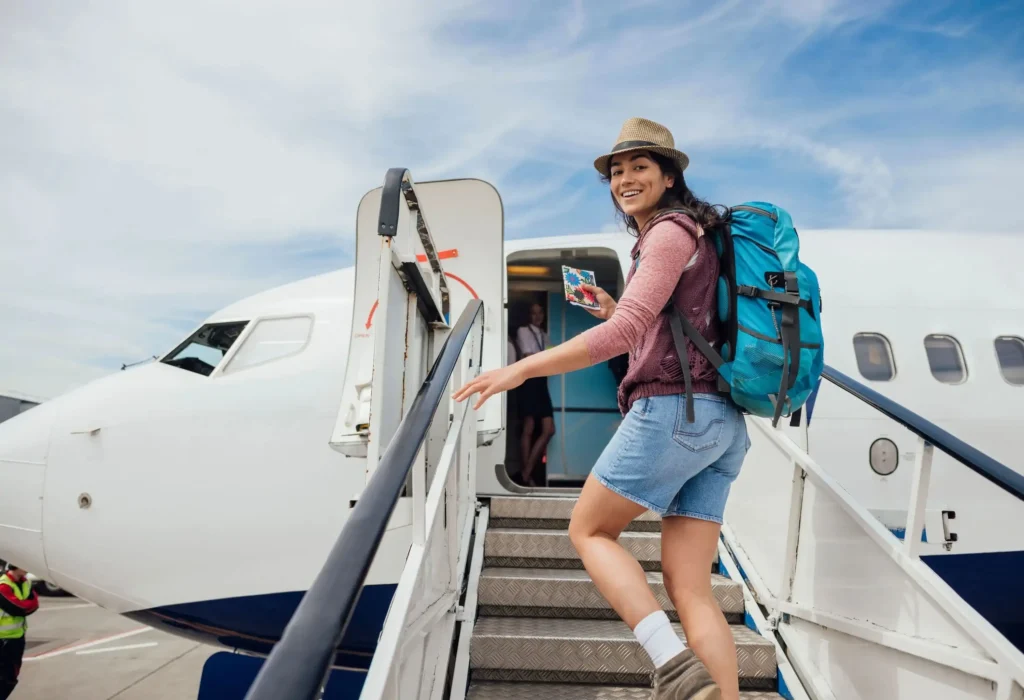
Flights are usually the #1 largest spend for digital nomads — if you’re booking them like a tourist.
The nomad approach to flights is entirely different.
Tools That Change the Game
The “Explore” function on Google Flights lets you enter your departure city and leave the destination blank. It gives you a map of every place you can fly, sorted by price. This is for nomads choosing their next destination, not the other way around.
Skyscanner “Everywhere” works similarly. Enter your city, set the destination to “Everywhere” and sort by cheapest month.
Secret tip: Use a VPN and search for the same flight from different countries. Airlines price flights based on where you’re searching from. A search from India or Brazil often returns lower prices than the same search from the US or UK.
The Positioning Flight Strategy
Instead of flying directly to your destination, fly first to a cheap regional hub. For example:
- Direct London to Bali = $800+
- London to Kuala Lumpur (low-cost carrier) = $350
- Kuala Lumpur to Bali (AirAsia) = $40
- Total = $390. You save over $400 — with a free stopover in KL.
The 6-Week Booking Window
Data from flight tracking tools indicates that booking 5–7 weeks out is the sweet spot for most international routes. Too soon and airlines haven’t released low-cost seats. Too late and prices spike.
Set fare alerts on Google Flights, Hopper or Airfarewatchdog for your target routes and let them do the watching.
6 Nomad Banking Setup: Stop Bleeding Money on Fees
ATM fees. Foreign transaction fees. Poor exchange rates. If you’re using a regular bank account abroad, charges can reach hundreds of dollars per year.
A good digital nomad banking setup can reduce almost all of these costs to zero.
The Three-Account System
Most seasoned nomads run three accounts at the same time:
- Account 1 — Income Account (home country): Keep this in your home country. Have clients pay into it. Never use it for daily expenses abroad.
- Account 2 — Travel Card (Wise or Revolut): Wise provides real mid-market exchange rates and lets you hold 40+ currencies. Revolut lets you spend fee-free in most currencies up to a monthly limit. Both are free to open.
- Account 3 — Emergency Cash Card (Charles Schwab if US, Starling if UK): Schwab’s investor checking account refunds all ATM fees worldwide — every single one. Starling does the same for UK residents. Keep this for emergencies or as a backup.
| Fee Type | Standard Bank | Nomad Setup |
|---|---|---|
| Foreign transaction fee | 2–3% per purchase | $0 |
| ATM withdrawal fee | $5–$8 per use | $0 |
| Exchange rate markup | 3–5% | 0.1–0.2% |
| Monthly estimated loss | $40–$80 | $0–$5 |
For the average nomad, this prevents $500–$1,000/year in unnecessary banking fees. The setup above is free to implement and free to use.
7 Tap Into the Nomad Community Economy
Here’s a budget strategy that doesn’t require any apps or credit cards — it’s just people helping people.
House Sitting: Free Accommodation for Almost Nothing
TrustedHousesitters and HouseCarers match homeowners who need their pets or property watched with nomads willing to housesit in exchange for free lodging.
This is completely legitimate. Thousands of nomads feed a cat and water some plants in exchange for a free place to stay in lovely homes around the world.
A TrustedHousesitters membership costs around $120–$180 per year. Book just two house sits of two weeks each and you’ve already saved $500–$1,500+ in accommodation. After that, every sit is profit.
Work Exchanges: Free Rooms in Exchange for a Few Hours of Help
Workaway and Worldpackers link travellers with hostels, farms, schools and businesses that provide free room and board in return for 3–5 hours of work per day.
This is ideal for nomads who work remotely in the mornings and lend a hand in the afternoons. You get a free bed, often meals, and an experience you couldn’t pay for.
Nomad Skill Swaps
Inside Facebook Groups, Slack communities and platforms like Nomad List, people are trading skills constantly. A web developer fixes a graphic designer’s website; in exchange, the designer creates brand assets for the developer. Zero money changes hands.
With a marketable skill — writing, design, code, photography, bookkeeping — you can barter away a significant portion of your nomad costs.
8 Leverage Geo-Arbitrage With Your Clients
This final strategy is by far the most powerful — and also the least discussed in generic budget travel writing.
Geo-arbitrage is earning money in high-income countries while spending it in low-cost ones. But the next level is actively positioning yourself and your offering for clients who pay top dollar.
How to Maximise Geo-Arbitrage Income
- Step 1 — Focus on clients in Switzerland, the US, UK, Australia, Canada or Northern Europe. Local clients in emerging countries pay 3–5x less for the same work.
- Step 2 — Use platforms that connect you to these clients — Toptal, Contra, Deel or LinkedIn all pay significantly better than Fiverr or Upwork for experienced professionals.
- Step 3 — Set your rates in line with what others charge where your clients are based. Most nomads charge too little because they feel guilty earning “Western” rates while living cheaply. Don’t. Just because you live in Chiang Mai doesn’t mean your skills are worth less.
- Step 4 — Choose your base for the best income-to-cost ratio. In Bali, a $5,000/month income with $1,200/month in expenses leaves you with $3,800 in savings. In Lisbon, the same income with $2,500/month in expenses nets $2,500. Both are excellent — but Bali edges ahead on geo-arbitrage math.
Geo-Arbitrage Sweet Spot Locations (2025–2026)
The best destinations for English-speaking nomads with high-income clients, factoring in livability, internet speed, visa options and cost of living:
- Chiang Mai, Thailand — Still the king for budget nomads
- Medellín, Colombia — Good time zone overlap for US clients
- Tbilisi, Georgia — Easy visa, ultra-low costs
- Plovdiv, Bulgaria — EU access, extremely affordable
- Penang, Malaysia — Underappreciated, great infrastructure
- Oaxaca, Mexico — Creative community, strong US time zone overlap
What a Realistic Monthly Digital Nomad Budget Looks Like
A well-optimised budget for a single digital nomad living in a mid-tier destination (think Medellín or Chiang Mai) using the strategies from this guide:
| Category | Budget | Notes |
|---|---|---|
| Accommodation | $400–$700 | Monthly rental or co-living |
| Food | $200–$350 | Mix of local restaurants + home cooked |
| Transport | $50–$100 | Local transport, no car |
| Coworking / Internet | $0–$150 | Covered by co-living, or café + coworking |
| Health insurance | $80–$150 | SafetyWing or similar nomad plan |
| Entertainment / Social | $100–$200 | Activities, dates, events |
| Flights / Travel days | $50–$150 | Monthly amortisation (slow travel reduces this) |
| Visa / Admin | $20–$60 | Amortised monthly cost |
| Total | $900–$1,900 | Comfortable, not a backpacker slog |
This is a comfortable budget — not a backpacker slog. It provides insurance, fun, and a real workspace.
Quick-Reference Summary: All 8 Strategies
- Slow travel — Stay 3–6 weeks minimum for monthly rates and local pricing
- Currency stacking — Target emerging hubs before they get discovered
- Co-living — Combine accommodation and workspace into one bill
- Smart visas — Use official digital nomad programs and avoid visa runs
- Flight hacking — Use positioning routes, VPN price checks and fare alerts
- Nomad banking — Wise + Revolut + Schwab/Starling = zero fees
- Community economy — House sitting, work exchanges and skill swaps
- Geo-arbitrage — Earn in richer markets, spend in cheaper ones
Frequently Asked Questions
Q: What is the minimum budget to start a digital nomad lifestyle?
Most veteran nomads recommend having 3 months of living expenses saved before you hit the road — roughly $3,000–$6,000 depending on your destination. This provides breathing room while you stabilise your income on the road.
Q: Which country is the cheapest for digital nomads today?
Based on livability, internet speed and daily cost of living combined, Georgia (Tbilisi), Albania and Indonesia (away from Bali’s tourist areas) are consistently among the cheapest as of 2025–2026. For ultra-budget nomads within the EU, Iași in Romania is also emerging on the radar.
Q: Is the digital nomad lifestyle really cheaper than living at home?
For most people from cities like London, New York or Sydney — yes, substantially cheaper. $1,200/month in Chiang Mai gets you far more than $3,500/month in London. But for people already living in a low-cost country, the math looks different.
Q: What health insurance do digital nomads actually use?
SafetyWing is the most popular entry-level choice (about $45–$65/month). Cigna Global, Allianz Care and IMG Global offer more comprehensive coverage. Avoid standard tourist travel insurance — it’s not designed for long-term stays.
Q: How can I find clients who will pay Western rates while I live abroad?
LinkedIn is your best friend here. Build your profile around a specific niche, post content, and reach out directly to companies in the US, UK or Australia. For freelancers, Toptal, Contra and Deel handle compliance and simplify getting paid globally.
Q: Is it really possible to live on under $1,000 per month as a digital nomad?
Yes — but only in certain places and with careful planning. Tbilisi, Plovdiv and lesser-known cities in Southeast Asia make it genuinely achievable. It’s tight but not miserable, particularly if you use house sitting to reduce accommodation costs to zero for weeks at a time.
Q: Do digital nomads have to pay taxes?
This depends entirely on your citizenship, residency status and how much time you spend in each country. US citizens pay taxes on global income regardless of where they live. UK, Australian and EU citizens have different rules. Hire a tax professional who understands expat and nomad situations — it’s worth every penny.