Living and working from anywhere in the world sounds like a dream. But without a solid strategy, money issues can twist that vision into a nightmare in no time.
The digital nomad life is on the up and up. Millions of remote workers now work from beaches, cafés, and co-working spaces around the globe. The reality is that most nomads who end up going back home within their first year do so because they got into money trouble — not because they couldn’t find work.
The pillar of a sustainable nomadic life is a smart digital nomad budget. It is what distinguishes those who are travelling for a few months from those who make it their permanent lifestyle.
In this guide, we’ll share 9 actionable, real-life hacks that will help you master your finances — whether you’re a beginner or a savvy road warrior.
Why so many nomads struggle financially (and the solution to it)
The majority of us have a budget in mind when we step out. But many are leaving out one crucial thing: nomadic expenses are vastly different from non-nomadic life.
Your rent can be $300 one month in Southeast Asia, then $900 the next in Europe. A flight can undo a week’s worth of saving. Healthcare, visas, SIM cards, travel insurance — the expenses mount in ways you didn’t anticipate.
Understanding where nomads truly allocate their monthly budgets is the first step. Housing is the biggest chunk at 35%, followed by food at 20% and transport at 15%. Knowing that breakdown helps you understand what to cut first. Popular nomad destinations like Chiang Mai and Tbilisi are far less expensive than Lisbon — the difference could mean saving $500 to $700 a month.
Hack 1
Create a “nomad-specific” budget — not just an ordinary one
So much of what you find on budgeting online is geared toward people with a home address and a regular paycheck. That advice doesn’t apply to nomads.
Why standard budgets fail on the road
As a nomad, your expenses depend on:
- Which country you are in
- The season (high vs. low)
- How long you spend in one place
- Visa deadlines and renewal costs
- Unexpected costs such as gear repairs or medical expenses
How to create a nomad budget that actually works
Start by separating your expenditure into three buckets:
- Fixed costs — things that don’t vary much, like subscriptions, loan repayments, and insurance premiums.
- Variable costs — charges that vary place to place, like housing, food, and transportation.
- Emergency buffer — a stash for surprise expenses. Aim to have at least one to two months’ worth of total expenses saved in this bucket.
Track every single expense for your first 60 days as a nomad. Most people are shocked by what they find. Apps such as Wise, Revolut, or simply a spreadsheet will help you see the full picture.
| Expense type | Example | Strategy |
|---|---|---|
| Fixed | Software subscriptions | Pay monthly in a one-time lump |
| Variable | Accommodation | Use slow travel |
| Emergency | Medical bills | Save 2 months of expenses |
| One-time | Visa fees | Research costs in advance |
Hack 2
Get into the game of slow travel
This is one of the most underutilised money-saving hacks in the nomad world.
What is slow travel?
Slow travel means settling in somewhere for a longer stretch of time — usually one to three months at a time — instead of bouncing from city to city every week.
How slow travel saves you serious money
Many places offer steep discounts when you stay for a month. A $50-a-night room can drop to $20–$30 per night on a monthly booking — a savings of 40% to 60%.
You also get to know the local grocery stores, inexpensive restaurants, and free internet spots. You stop making costly “tourist mistakes,” such as eating at hotel restaurants or taking taxis from airports.
A nomad bouncing from city to city every week in Southeast Asia could spend $2,500 a month. The same nomad staying in one city for a month at a time might spend just $1,200 — doing the exact same things.
The golden rule: If you plan to be anywhere longer than 10 days, always check monthly deals first.
Hack 3
Select your base locations strategically
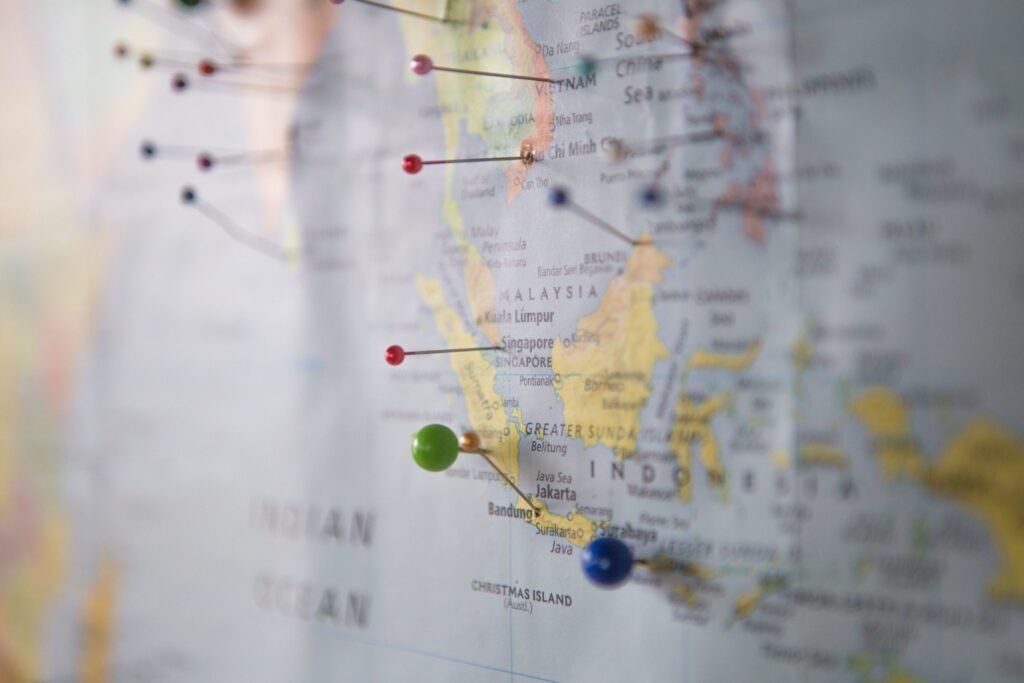
Not all countries are equal when it comes to digital nomadism. Prices vary dramatically between popular nomad cities.
The “big three” budget zones
- Budget regions ($1,500/month or less): Southeast Asia (Thailand, Vietnam, Indonesia), Eastern Europe (Georgia, Bulgaria, Serbia), and parts of Latin America (Colombia, Mexico).
- Mid-range zones ($1,500–$2,500/month): Portugal, Spain, Croatia, and Costa Rica. More expensive, but with fantastic infrastructure and quality of life.
- High-cost zones ($2,500+/month): Western Europe, Australia, Japan, and the USA. Awesome destinations, but you must back them up with a strong income.
The “base country” strategy
Choose one low-cost, comfortable country to use as your base for four to six months out of the year. Use that time to stash away money and rebuild your emergency fund. Then spend the rest of the year visiting pricier destinations without breaking a sweat.
Many veteran nomads use Chiang Mai, Tbilisi, or Medellín as their home base — cities with fast internet, a robust nomadic community, and a very low cost of living.
Hack 4
Slash banking fees before they slash your budget
This can save you $300 to $500 a year — and most nomads never take advantage of it.
The real price of ordinary bank accounts
Traditional bank accounts typically charge 3%–5% for foreign transactions. ATM fees abroad can total $3–$8 per withdrawal. Withdraw cash 10 times a month, and that’s $30–$80 down the drain in fees alone — $360 to $960 over a year.
Tools every nomad should use
- Wise (formerly TransferWise): Hold money in 50+ currencies and spend at the true mid-market exchange rate. Includes a borderless debit card.
- Revolut: Free ATM withdrawals (within a monthly limit) and real-rate currency exchange. Premium plans unlock higher limits.
- Charles Schwab (US citizens): Reimburses all ATM fees worldwide, every month. One of the best banking tools for US nomads.
- N26 (Europe): No foreign transaction fees and free ATM usage worldwide (on some plans).
Practical setup: Hold most of your money in Wise, use Revolut for daily spending, and keep one standard account as a backup. Never depend on a single account abroad — banks can freeze cards without warning.
Hack 5
Hack your accommodation costs
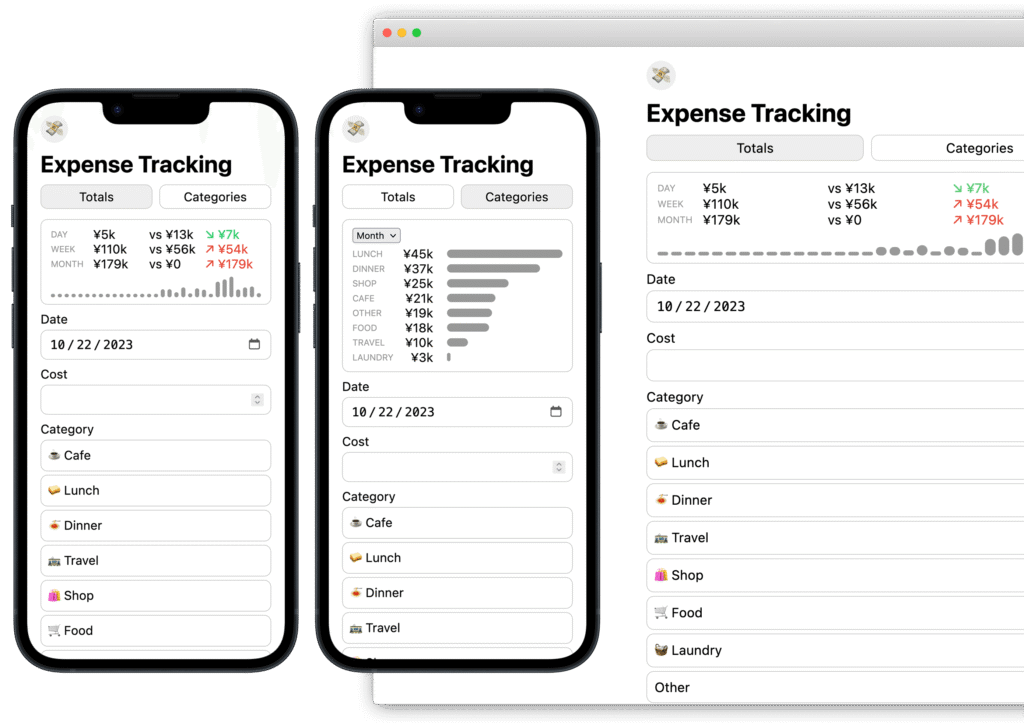
Accommodation is your biggest expense. Cutting it by even 20% changes everything.
The monthly rental method
Don’t book by the night if you intend to stay for more than 10 days. Always check for monthly deals first:
- Airbnb: Contact hosts directly and request a monthly discount. Most will offer 30%–50% off for a 28-day booking.
- Facebook Groups: Search for “[city name] expats” or “[city name] apartment rentals.” Much cheaper than any booking platform for furnished monthly rentals.
- Idealista, Craigslist, or local equivalents: Direct listings from landlords eliminate platform fees entirely.
House-sitting and home swaps
House-sitting means watching someone’s home (and often their pets) while they’re away, in exchange for free accommodation. Platforms like TrustedHousesitters and HouseCarers connect homeowners with nomads. Some nomads house-sit for four to six months a year, cutting their largest expense down to nearly zero.
Home swapping is another option. Websites like HomeExchange let you exchange your home (or a friend’s home) with someone in the city you’re visiting.
The hostel hack
In the off-peak season, hostel private rooms can be surprisingly affordable — and often include utilities, Wi-Fi, and breakfast. For short stays of one or two weeks, a hostel private room often beats a standard Airbnb once you account for cleaning fees.
Hack 6
Build an income buffer before leaving home
This hack isn’t about spending less — it’s about making your budget sustainable from the start.
The 3-month rule
Save at least three months of your expected nomad budget before going full-time. This is your runway. Most new nomads underestimate how long it takes to stabilise freelance or remote income. Clients dry up. Projects get delayed. It takes time to learn a new city. Your savings cushion is your buffer against an early exit — or rash decisions that harm your career.
Nomad income streams that stick
Most financially secure nomads maintain multiple streams of income:
| Type of income | Examples | Stability level |
|---|---|---|
| Remote employment | Full-time remote job | High |
| Freelancing | Design, writing, coding | Medium–high |
| Passive income | Digital products, courses | Medium–high |
| Content creation | YouTube, blog, newsletter | Low (early on) |
Even a small passive income stream — say, $200–$400 a month from a digital product — can significantly ease the pressure on your freelance income.
Hack 7
Use travel reward cards like a pro
Frequent flyer miles and credit card points can cover a substantial portion of your yearly travel costs — if you use them properly.
How points and miles work for nomads
You earn points with every dollar you spend on a travel rewards card, which can then be redeemed for flights, hotel stays, lounge access, and more. Nomads spend a great deal — on flights, accommodation, gear, and software. Put that spending on the right card and watch it compound.
Cards worth knowing about
- Chase Sapphire Preferred (US): Strong sign-up bonuses and flexible points transferable to United, Hyatt, and others.
- American Express Platinum (US): Excellent lounge access and airline credits — best for nomads who fly frequently.
- Barclaycard Avios (UK): Great value on British Airways routes in Asia and the Americas.
- Citi Premier: Good flat earning rate on everyday spending with flexible transfer partners.
Never carry a balance. Interest charges will negate any rewards you earn. Pay in full each month. Use a single card for all large purchases (flights, accommodation, subscriptions), and a second card for everyday spending in the category where it earns more points — often dining or groceries.
Hack 8
Play the geo-arbitrage game
Geo-arbitrage means earning income in a strong currency (USD or EUR) while spending in a weaker, cheaper one.
Why this is the most powerful nomad budget hack
This is the fundamental financial advantage of the nomad lifestyle. If you earn $4,000 a month in USD and live in Chiang Mai — where a comfortable nomad lifestyle costs around $1,200–$1,500 a month — you could be saving $2,500 every single month. That’s $30,000 in savings in one year, while living very comfortably. The same income in New York City would leave very little after rent and basic expenses.
How to maximise geo-arbitrage
Always research the cost of living at your next destination in advance. Tools like Numbeo, Nomad List, and Teleport provide detailed cost-of-living data for hundreds of cities.
Aim for cities where your income-to-cost ratio is above 3:1 — your monthly income should be at least three times your monthly expenses. This allows you to save, invest, and cover emergencies.
Avoid the “lifestyle inflation trap.” Many nomads relocate to a low-cost country and then spend more — better restaurants, more flights, nicer gear. However cheap the city, keep your spending disciplined.
Hack 9
Create a monthly finance check-up routine
No budget means anything if you’re not regularly checking whether it’s working.
The 30-minute monthly money review
Dedicate 30 minutes at the end of each month to reviewing your finances. This single habit is what differentiates financially successful nomads from those who are always struggling.
Here’s a simple framework:
- Step 1: Compare actual spending versus planned. In each category, were you over or under? What caused the differences?
- Step 2: Review your income. Was it stable? Are any clients at risk of churning? Do you need to pitch new work?
- Step 3: Check your emergency fund. Is it still one to two months of expenses? If not, plan to rebuild it.
- Step 4: Plan next month’s destination and estimate costs. Account for any upcoming flights, visa fees, or gear purchases.
- Step 5: Check your savings rate. Are you saving money or just breaking even? Most nomads should aim to save at least 20% of their income each month.
Tools that make this easy
- YNAB (You Need A Budget): The best budgeting app for nomads — excellent for tracking variable expenses across different currencies.
- Notion or Google Sheets: Great for building your own nomad financial dashboard.
- Wise Account: Automatically categorises expenses by country, making monthly reviews simple.
- Splitwise: Ideal for when you travel with others and need to settle shared expenses.
Digital nomad budget cheat sheet
| Monthly income | Housing | Food | Transport | Savings goal | Best regions |
|---|---|---|---|---|---|
| $2,000 | $400–500 | $250 | $150 | 10–15% | SE Asia, Eastern Europe |
| $3,500 | $600–800 | $350 | $200 | 20–25% | SE Asia, Latin America, Portugal |
| $6,000+ | $900–1,200 | $500 | $300 | 30–40%+ | Anywhere |
Mistakes to avoid when budgeting as a digital nomad
Even seasoned nomads can fall into these traps:
- Forgetting one-time costs. Visa fees, travel vaccinations, new gear, and city setup costs aren’t part of your normal monthly budget. Plan for them separately.
- Underestimating healthcare costs. A single visit to a private clinic abroad can cost $200–$500. Good travel health insurance is non-negotiable.
- Using the wrong cards. Paying an unnecessary 3% foreign transaction fee on every purchase is money wasted. Switch to a fee-free card before your first trip.
- Over-relying on one income stream. Freelance clients disappear. Remote jobs can end. Build multiple income streams as quickly as you can.
- Not accounting for “comfort spending.” When you’re fatigued, anxious, or lonely on the road, you spend more. Factor this into your budget — it’s part of nomad life.
FAQs: your questions about digital nomad budgets
How much money do I need to start as a digital nomad?
In budget nomad cities, most people can live comfortably on $1,200–$2,000 a month. However, it’s strongly advisable to have at least three months of expenses saved before you go. That means preparing $3,600–$6,000 in advance of departure.
How much does it cost to be a digital nomad in Southeast Asia?
A solid nomad lifestyle in Chiang Mai or Bali — including rent, food, co-working space, transport, and entertainment — generally costs about $1,000–$1,500 a month. Budget travellers can do it for under $800.
Is travel insurance really necessary for digital nomads?
Absolutely. One night in a private hospital in a country like Thailand or Mexico can cost $500–$2,000. A serious emergency can run into the tens of thousands. Always carry health and travel insurance. Two reputable options tailored to digital nomads are SafetyWing and World Nomads.
What about taxes as a digital nomad?
Tax rules vary enormously depending on your home country and where you travel. Most nomads work with a tax professional who specialises in remote work or expat taxation. As a rule, never assume you have no tax obligations — the penalties can be severe.
Which is the best budgeting app for nomads?
YNAB (You Need A Budget) is the favourite among seasoned nomads because it handles variable income and multi-currency expenses better than most alternatives. Wise is excellent for managing currency-based expenses. Many nomads combine both tools.
Is it possible to save money as a digital nomad, or should I just expect to break even?
Yes — geo-arbitrage makes saving significantly easier for many nomads than a traditional lifestyle would. Nomads who earn a strong currency and live in low-cost countries routinely save 25%–40% of their income. Discipline and careful selection of base locations are the keys.
Final thoughts: your digital nomad budget starts here
A digital nomad budget is not about being cheap. It is about being smart.
The long-term nomads who stay on the road are not those who make the most money. They are the people who keep close tabs on what they’re spending, strategically choose their locations, use the right tools, and regularly check in on their finances.
Try two or three of these tricks this month. Build a simple budget using the framework above. Replace your bank card with a fee-free alternative. View your next destination through the lens of geo-arbitrage.
Small changes compound over time. A nomad saving an extra $300 a month using these hacks saves $3,600 a year — enough to fund months more travel, build a meaningful emergency safety net, or start investing for the long term.