Picture yourself working from a cafe in Bali, a coworking space in Lisbon, or a beach town in Mexico — all while remaining financially fit. Sounds like a dream, right? It’s reality for thousands of digital nomads.
But here’s the thing nobody mentions enough: having the freedom to travel and work remotely does not mean that money magically works itself out. And without a proper digital nomad budget set up, even the most exciting travel lifestyle can easily fall apart.
The good news? You don’t have to be a finance whiz or spreadsheet nerd to get it right. You simply require the right hacks — practical, tried-and-true systems that work for a life in motion.
This article guides you through 6 simple, life-changing hacks to create a smart expat budget. Whether you’re just starting out or currently living the nomadic life, use these tips to spend less, worry less, and stay on the road longer.
How to Create Your Digital Nomad Budget Setup (Hint: It’s Different From Regular Budgeting)
Before we get into these hacks, let’s clarify something upfront: nomad budgeting is not regular budgeting.
When you live in one place, your costs are relatively fixed. Rent is fixed. The price of groceries is about the same every month. Utilities don’t shock you.
If you travel full-time, everything is always changing. Your rent changes from week to week. Currency conversion rates impact how far your money actually stretches. Healthcare costs vary by country. Unexpected travel delays can wipe out your account overnight.
And this is precisely the reason a dedicated digital nomad budget setup counts. It’s not only about saving money — it’s about creating a nimble financial system that performs anywhere you happen to be in the world.
Having established the difference, let’s get to the hacks.
Hack #1 — Know Your “Nomad Number” Before You Go Anywhere
Where your nomad budget setup as a new digital nomad starts is a very simple calculation: Your Nomad Number.
Your Nomad Number is the amount of money you need to earn every month in order to afford your needs and travel comfortably. That’s your financial floor — the figure that says “I’m good” vs. “I need to find more work ASAP.”
How to Find Your Number
Here’s a simple formula:
Nomad Number = Monthly Accommodation + Food + Transport + Work Tools + Health Insurance + Fun/Buffer
This is 30–40% MORE than most beginner digital nomads expect. They fail to take things into account such as:
- Visa and travel expenses from one country to another
- Travel insurance and health coverage
- Internet plans or coworking memberships
- Software subscriptions (VPN, cloud storage, project tools)
- Costs of setting up for the first time in a new city
Budget Level Categories
| Budget Level | Monthly Range | Works Well Where |
|---|---|---|
| Budget Nomad | $1,200 – $2,000 | Southeast Asia, Eastern Europe, Latin America |
| Mid-Range Nomad | $2,000 – $3,500 | Southern Europe, some of Asia, Mexico |
| Comfort Nomad | $3,500 – $6,000 | Western Europe, Japan, Australia |
| Premium Nomad | $6,000+ | US/Canada/Scandinavia/UAE |
Once you know your Nomad Number, everything else about budgeting becomes exponentially easier. You know exactly how much income will keep you afloat — and what it’ll take for you to actually thrive.
Pro tip: Always add a 20% buffer on top of the number you come up with. When it comes to unexpected costs, it’s not “if” but “when.”
Hack #2 — Get a Zero-Fee International Bank Account (Seriously, Quit Losing Money at ATMs)
One of the biggest leaks in any digital nomad budget setup is unnecessary banking fees.
Consider this: A typical bank might assess a 3% foreign transaction fee, plus a $5 flat fee per ATM withdrawal. If you withdraw money five times a month across different countries, you may be burning $75–$100 every single month — merely in fees.
That’s more than $1,000 per year down the drain for nothing at all.
Accounts Every Nomad Should Know About
- Wise (formerly TransferWise): Multi-currency accounts with real exchange rates and low fees for money transfers. Great for accepting client payments in multiple currencies.
- Revolut: Allows you to hold and convert 30+ currencies. The free plan is limited but still saves a lot compared to traditional banks.
- Charles Schwab (for US nomads): Refunds ALL ATM fees worldwide. Zero foreign transaction fees.
- N26 (for European nomads): Free payments abroad, cheap ATM fees within and outside Europe.
The Two-Account Strategy
Smart nomads operate a 2-account setup:
- A home base account where clients pay and income comes in
- A travel spending account (Wise or Revolut) for daily use
This way, your primary income is protected and never directly exposed to foreign ATM risk. You move only what you need into your travel account each month.
The difference is staggering. Just changing banks can save you enough to take an extra week off every year.
Hack #3 — Split Your Budget Into “Flexible” and “Fixed” Buckets
The majority of budget systems let nomads down by treating all spending equally. But nomad finances are complex — some costs are fixed, others vary over time.
The bucket system solves this beautifully.
Bucket 1: Fixed Costs (Non-Negotiables)
These are expenses that remain fairly consistent regardless of your location:
- Travel health insurance
- Software subscriptions (Adobe, Notion, Slack, etc.)
- Phone plan
- Loan or debt repayments in your home country
- Savings contributions
Set a fixed amount each month to cover these. Leave this category alone for “flexible” spending.
Bucket 2: Location-Based Costs (Flexible)
These change depending on your location:
- Accommodation
- Food and groceries
- Local transport
- Entertainment
This is where your digital nomad budget setup gets clever. Research your next destination before you arrive. Sites such as Numbeo, Nomad List, and Budget Your Trip provide real city-by-city cost-of-living data.
Bucket 3: Emergency + Opportunity Fund
This is the most neglected bucket — and the one that matters most.
Aim for a buffer of 3 months of your Nomad Number in savings. This protects you from:
- A sudden visa denial that forces you to fly out early
- A work laptop malfunctioning in a remote place
- A slow income month combined with a health emergency
Don’t think of this fund as paranoia — think of it as freedom. Not having a buffer means you have to say yes to bad clients, work through sickness, and live in constant panic.
Hack #4 — Plan Your Moves During “Shoulder Seasons”
Here’s a little-known hack to reduce your accommodation and transport costs by up to 30–50%: become a shoulder season traveler.
What Is a Shoulder Season?
Every destination has three seasons:
- Peak season – Prices skyrocket. Crowds everywhere. Popular tourist spots are chaotic.
- Off season – Prices drop significantly, but the weather could be miserable or services may close.
- Shoulder season – The sweet spot. Prices are 20–50% lower than peak, the weather is still pleasant, and crowds are manageable.
When it comes to a digital nomad budget setup, timing travel around shoulder seasons is one of the most powerful cost-cutting strategies available.
Shoulder Season Cheat Sheet
| Destination | Shoulder Season | Approx. Savings vs. Peak |
|---|---|---|
| Bali, Indonesia | Apr–May, Sep–Oct | 25–40% |
| Lisbon, Portugal | Mar–May, Oct–Nov | 30–50% |
| Chiang Mai, Thailand | Feb–Apr | 20–35% |
| Mexico City, Mexico | Jan–Mar, Aug–Sep | 20–30% |
| Tbilisi, Georgia | Apr–Jun, Sep–Oct | 25–45% |
| Medellín, Colombia | Feb–Mar, Aug | 20–35% |
Planning your moves around these windows means your accommodation and flight budget inherently decreases — without a reduction in quality of experience.
Bonus tip: Book accommodation weekly or monthly (not nightly) through Airbnb, Booking.com, or directly with hostels. Monthly stays often come with 30–50% discounts on the nightly rate.
Hack #5 — Create a Basic Income-Tracking Dashboard
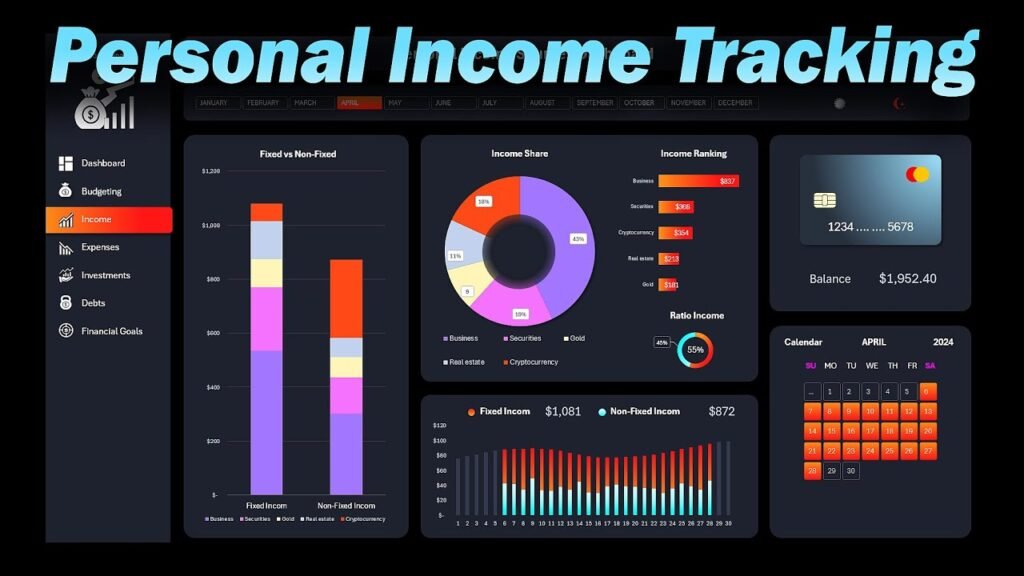
A digital nomad budget setup is only effective if your income is visible and trackable. This is what most nomads are blind to.
Freelancers and remote workers usually experience irregular income. One month you earn $5,000. The next, it’s $1,800. Without tracking, you end up spending your peak-month income as though it’s your average — and getting blindsided when a slow month rolls around.
The 3-Month Rolling Average Method
Instead of looking at last month’s earnings, budget using a 3-month rolling average. Here’s how it works:
- Track all incoming payments as they arrive
- At the start of every month, add up income from the previous 3 months
- Divide that total by 3 to find your average monthly income
- Budget based on that figure — not last month’s
This averages out the highs and lows, providing a more accurate picture of what you’re actually earning.
Tools That Make This Easy
You don’t need complex software. Simple tools go a long way:
- Notion or Airtable: Create a custom income/expense tracker with filters by month, currency, and category
- YNAB (You Need A Budget): Excellent for envelope-style budgeting on variable income
- Wave: Free accounting software for the self-employed
- Google Sheets: Simple, free, and works on any device
The goal is to spend 10–15 minutes each week on your numbers. That’s it. Consistency beats complexity every time.
This flow — income comes in, average calculated, distributed to buckets — is the backbone of a healthy digital nomad budget setup.
Hack #6 — Move to a Cheaper City and Geo-Arbitrage
Geo-arbitrage is the most powerful idea in the entire digital nomad toolkit. And yet, many have never heard of it.
What Is Geo-Arbitrage?
Geo-arbitrage refers to earning money in a high-value currency (such as USD, EUR, or GBP) and spending it in a country where the cost of living is drastically lower.
Here’s a simple example:
A freelance designer earning $4,000/month while living in New York may be spending 90% of that on rent, food, and bills. But if that same designer relocates to Chiang Mai, Thailand, they’ll only spend 35–40% of their income — and live extremely comfortably.
Same income. Radically different lifestyle.
Where Geo-Arbitrage Works Best
| Region | Monthly Comfortable Living Cost | Strong Income Currencies |
|---|---|---|
| Southeast Asia | $800 – $1,600 | USD, EUR, GBP, AUD |
| Eastern Europe | $900 – $1,800 | USD, EUR |
| Latin America | $1,000 – $2,200 | USD |
| South Asia | $600 – $1,200 | USD |
| East & North Africa | $700 – $1,400 | USD, EUR |
How to Implement This in Your Budget Setup
Always manage your nomad budget in the currency of your income, then convert to local currency upon arrival. Never think about your budget in local terms only — that skews your perspective on value.
And don’t remain in expensive cities simply because they’re popular. Cities such as Budapest (Hungary), Tbilisi (Georgia), Ho Chi Minh City (Vietnam), and Medellín (Colombia) offer great infrastructure, fast internet, good food, and a vibrant nomad community — all for a fraction of the cost of popular Western destinations.
Step-by-Step Action Plan for Your Digital Nomad Budget Setup
| Hack | Action | Impact |
|---|---|---|
| Know your Nomad Number | Calculate monthly expenses + 20% buffer | Sets your income goal |
| No-fee bank account | Switch to Wise, Revolut, or Schwab | Saves $500–$1,000/year |
| Bucket system | Split costs into Fixed, Flexible + Emergency | Makes budgeting actually doable |
| Travel shoulder season | Plan moves around off-peak windows | Cuts costs 20–50% |
| Track income weekly | Use rolling 3-month average to budget | Prevents overspending |
| Use geo-arbitrage | Pick destinations where income multiplies quality of life | Maximum lifestyle value |
None of these hacks demand any special skill. They just need a little planning ahead of time — and that planning pays off enormously once you hit the road.
The Mindset Shift That Makes It All Work
Here’s something not many will tell you without coaxing: the moment you become a digital nomad, your relationship with money must change.
In a conventional life, money is largely reactive. It comes in. It goes out. Repeat.
For a nomad, money is a tool to help you design your own life. Every dollar you avoid paying in banking fees, unnecessary accommodation, or poorly timed flights is a dollar that buys you another week somewhere magical.
The ultimate digital nomad budget is not a spreadsheet. It’s a mentality — one where you’re always aware of where your money is going, why it’s going there, and whether you’re getting the experience you actually want in return.
Once that mindset clicks, budgeting no longer feels like a chore. It starts feeling like power.
Digital Nomad Budget Setup FAQ
Q: How much money do I need to start living as a digital nomad? There’s no definitive answer, but most nomads recommend having at least 3–6 months’ worth of living expenses saved before you embark. This provides a buffer while your income firms up and you determine your real costs in various locales.
Q: How do digital nomads deal with taxes? Taxes vary a lot depending on your home country and where you’re traveling. Most nomads use a combination of their home country’s tax rules and the Foreign Earned Income Exclusion (for US citizens) or tax treaties (for other nationalities). It’s highly recommended to consult a tax professional specializing in international work.
Q: Which budgeting app is best for digital nomads? YNAB (You Need A Budget) is great for variable income. Wise and Revolut serve as both budgeting tools and bank accounts. Many nomads swear by a simple Notion or Google Sheets setup that they tailor themselves. The best tool is the one you will use regularly.
Q: How do I budget for health insurance as a digital nomad? Monthly rates range from about $50–$200/month depending on age, coverage level, and provider. SafetyWing, World Nomads, and Cigna Global are common nomad health insurance options. Check whether your plan covers evacuation, which is especially important in remote destinations.
Q: Can I save money while traveling full-time? Absolutely. In fact, many nomads end up saving more while traveling than they did at home — especially if they take advantage of geo-arbitrage to live in low-cost countries while earning in a strong currency. The key is to keep track of your income and expenses consistently.
Q: How often should I check in on my nomad budget? At minimum, once a month. Many seasoned nomads do a quick scan every week — perhaps 10 minutes to review income and expenses and note upcoming bills. This keeps surprises small and manageable rather than catastrophic.
Wrapping Up
Setting up a budget as a digital nomad shouldn’t be daunting. You don’t have to be a finance whiz or log every coffee purchase. What you need is a simple plan that works with your life, not against it.
Know your Nomad Number. Use the right bank. Bucket your money. Time your travels smartly. Track your income consistently. Let geo-arbitrage work for your quality of life.
These six hacks work together. Each one saves you money or relieves stress. Combined, they create a financial foundation that provides real, prolonged freedom on the open road.
You’ve got the tools. Now it’s time to use them.