Digital Nomad Budgeting for Beginners: 9 Tips That Actually Work
So you want to do the whole work-from-a-beach-in-Bali, a-café-in-Lisbon or a-co-working-space-in-Medellín thing — while getting paid on your laptop? That dream is real. But here’s what nobody tells you when starting out: the primary reason digital nomads fail is not a shortage of clients or slow internet. It’s poor money management.
Being a budget freelancer as a digital nomad means managing multiple currencies, chasing invoices, paying upfront for your health insurance and ensuring you don’t blow your life savings on a bad month in an expensive city. It sounds overwhelming. But with good habits from the outset, you can make it work — and even enjoy the ride.
Here’s a breakdown of 9 actionable and proven tips, tailored for total beginners. No fluff. No vague advice. Exactly what you need to know now.
Tip 1Before quitting, know your “survival number”
Before you can buy a one-way plane ticket to anywhere, there’s one number you need to know: your monthly survival number.
This is the lowest amount of money you need every month to pay for your basic living expenses as a freelancer — no luxuries, just essentials.
How to calculate it
Take note of every nomad expense you’ll incur:
- Accommodation (in a hostel dorm, coliving space, Airbnb or local rental)
- Food (groceries + occasional restaurants)
- Transport (flights, buses, local transport)
- Health insurance (non-negotiable — more on that later)
- Software tools and subscriptions
- Coworking space or café budget
- Emergency fund contribution
Add it all up. Then add another 20% on top as a cushion. That total is your survival number.
Most new nomads completely underestimate this. Bali might cost $1,000/month. But throw in a round of food poisoning, a last-minute flight and a day pass to a coworking space — and suddenly it’s $1,400.
Why this matters for freelancing
Your survival number tells you just how much you need to earn before it’s safe to go nomadic. You are ideally aiming to cover 1.5× your survival number month-over-month for 3 months leading into full-time pursuit.
Tip 2 Develop a three-bucket budgeting system
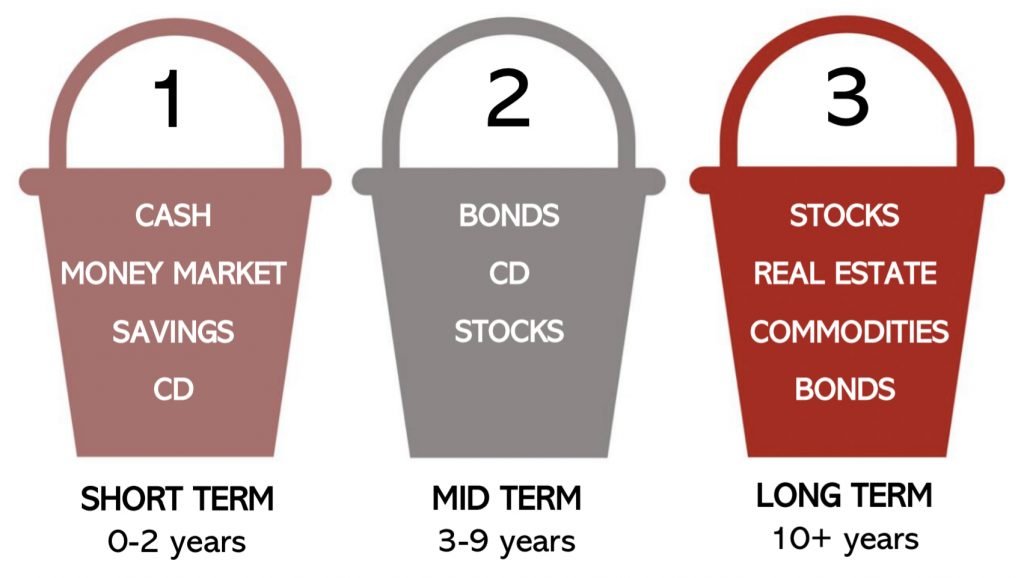
Freelancer budgeting is not the same as salary-based budgeting. Your income is not the same every month. Some months are great. Others are dry. A three-bucket system keeps you stable no matter what.
The three buckets
| Bucket | What it’s for | % of monthly income |
|---|---|---|
| Needs | Rent, food, insurance, tools | 50–60% |
| Safety | Emergency fund, slow-month buffer | 20–25% |
| Growth | Courses, gear upgrades, marketing | 10–15% |
| Fun | Travel experiences, hobbies | 10% |
Upon receiving each client payment, split it across your buckets immediately. Don’t wait. Don’t spend first and put “whatever’s left” in savings — because whatever’s left is generally nothing.
The safety bucket is non-negotiable. Your safety bucket is your rescue line. A client can ghost you. A project can be cancelled. You may become ill for a couple of weeks. You should have a fully funded emergency fund (3 to 6 months of your survival number) so that these events don’t wipe you out financially. Set up this bucket before you consider anything else.
Tip 3 Price your services as a business, not a hobbyist
This is where the majority of beginners get it wrong. They charge too little out of fear of losing clients. The result? They burn out working 60 hours a week for $800 a month.
Hidden costs employees don’t consider
As a freelancer, you have to pay for things a regular employee doesn’t:
- Taxes: 20–30% of income on average, depending on your country
- Health insurance: Often $100–$300/month
- Software: Project management, invoicing, video editors
- Downtime: Being sick or taking a holiday means you don’t earn
- Client acquisition: Pitching takes time and is unpaid
A simple rate formula
Hourly rate = (survival number × 12) ÷ billable hours per year
Then add another 30% for taxes and unpaid time.
Let’s say your survival number is $2,000/month and you bill 20 hours/week (960 hours/year). Your base rate is $25/hour. Add 30%, and you need to bill at least $32–$35/hour just to cover your costs — not to prosper.
Beginners should generally be asking for more than they realise. Test higher rates. You’ll lose fewer clients than you think.
Tip 4 Strategically choose low-cost bases
The biggest perk of the digital nomad budget lifestyle is geoarbitrage — earning USD or EUR and spending in countries where your money goes further. This is perfectly legal, it’s clever, and it’s one of the quickest ways to start saving money as a nomad.
How to choose your base
You don’t want just the cheapest place. Ask yourself:
- Is the internet speed and stability good enough for my work?
- Is there a good nomad/freelance community?
- Is it simple to obtain a visa or stay legally?
- Is it affordable to fly in and out?
Cheap cities with awful WiFi kill clients. Balance cost with functionality.
Top destinations for nomads on a budget in 2025 include Tbilisi (Georgia), Medellín (Colombia), Chiang Mai (Thailand) and Bali (Indonesia) — all known for low costs, reliable internet and active nomad communities.
Tip 5 Keep your finances separate like a boss

Combining personal and business money into a single account is one of the most common mistakes beginners make. It creates havoc at tax season, makes tracking income a pain, and explains how you can accidentally spend money you’d been saving for rent.
Financial setup for nomad freelancers
Open at least three separate accounts or wallets:
- Business income account: All client payments hit this account. Nothing else. This tracks your gross income.
- Personal expense account: Pay yourself a monthly “salary” from the business account. This is what you live on.
- Tax reserve account: Move 25–30% of every payment into this account. Don’t touch it. Ever. Until tax season.
Tools that help
- Wise (formerly TransferWise): Great for receiving international payments with low fees
- Revolut: Excellent multi-currency account for everyday spending
- Wave or FreshBooks: Free to low-cost invoicing and bookkeeping tools
- YNAB (You Need A Budget): Excellent for zero-based budgeting on irregular income
Tip 6Chase delinquent payments before they become lost payments
Chasing down unpaid invoices is one of the most financially painful experiences for new freelancers. It feels awkward. But failing to collect money is the fastest route to blowing your budget.
Set clear payment terms from day one
Every contract or project agreement should include:
- Net 7- or 14-day terms (not net 30 or net 60)
- 50% upfront deposit from new clients
- Late payment fees (e.g., 1.5% of the balance owed per month)
Most clients won’t contest these terms — especially if presented professionally.
When and how to follow up without being awkward
| Timeline | Action |
|---|---|
| Day 1 past due | Send a polite reminder email. Assume it was forgotten. |
| Day 7 overdue | Firm follow-up. Note that the late fee will apply. |
| Day 14 overdue | Issue a formal notice. Stop all further work until payment is received. |
Keep it professional. Keep it factual. You should not apologise for seeking to get paid.
Tip 7Get health insurance — this is not optional
This is the advice most newcomers avoid because it seems like an unnecessary expense. Don’t skip it.
A single medical emergency without insurance in a foreign country can bankrupt an entire emergency fund. A broken leg in Thailand, a dental problem in Mexico, an infection anywhere — these costs can be astronomical without coverage.
Digital nomad health insurance options
| Type | Best for | Approx. cost |
|---|---|---|
| SafetyWing Nomad Insurance | Budget travelers, short stays | $45–$60/month |
| WorldNomads | Adventure travelers, more activities covered | $80–$150/month |
| Cigna Global | Long-term nomads, comprehensive coverage | $150–$300/month |
| Local insurance | If staying in one country 6+ months | Varies widely |
For beginners, SafetyWing is usually the best starting point. It’s inexpensive and covers the essentials in most countries. You can upgrade to a more comprehensive plan as your income grows.
Don’t forget dental and vision. Many nomad health plans don’t cover these. Set aside $50–$100/month, or consider countries where dental care is affordable out-of-pocket (Mexico, Thailand and Hungary are popular for dental tourism).
Tip 8Create income streams that don’t all require your time
If you have one client or one service, you are one bad email away from financial panic. Diversifying your income streams is a key digital nomad budgeting move — and easier to begin than most people assume.
Start with one, then build
- Months 1–6: Client services. Get stable income first.
- Months 7–12: Add a second retainer client. Trade project work for ongoing monthly revenue.
- Year 2+: Build a passive income stream — a template pack, mini-course or stock assets.
Retainers are the single biggest upgrade a freelancer can make. One $800/month retainer is worth more than 10 one-off projects.
Tip 9Track every dollar — the little ones too
If you don’t track, budgeting is just a guess. And guessing will slowly drain your account in ways you never see coming.
- $4 coffee × 30 days = $120/month
- The software subscription you forgot to cancel
- The $22 airport meal instead of the $8 street food you’d intended
These small leaks are where digital nomad budgets break down.
Build a weekly money review habit
Every Sunday (or whatever day works for you), spend 15 minutes on your finances:
- Total income this week
- Total spending this week
- Which bucket did each expense come from?
- Any surprises or overages?
- What needs to adjust next week?
Free and cheap tracking tools
- Notion: Build a custom income/expense tracker (free)
- Google Sheets: Flexible and free
- Emma or Copilot: Smart bank-linked apps for automated tracking
- Xero: A more robust accounting solution as your income scales
Common money mistakes new nomads make
- Mistake 1: Confusing revenue with profit. Getting paid $3,000 this month doesn’t mean you made $3,000. After taxes, tools and expenses, you may have netted $1,800. Always calculate net income.
- Mistake 2: Relocating before income is stable. Changing location doesn’t solve an income problem — it compounds it. Get stable income first, then travel.
- Mistake 3: Not saving in good months. When you have a better-than-expected month, bank the excess. Slow months are coming.
- Mistake 4: Waiting until tax season to deal with taxes. Set aside a fixed percentage every month. Treat it as a non-negotiable expense.
- Mistake 5: Having only one client. A single client is a job, not a freelance business. Diversify early.
FAQs: budgeting for digital nomad freelancers
Q: How much should I save before going nomadic as a freelancer?
Aim for at least 3–6 months of your survival number in savings before making the jump. If your monthly expenses are $1,500, save $4,500–$9,000 before going fully nomadic.
Q: Which country is the best option for nomads on a tight budget in 2025?
Destinations including Georgia (Tbilisi), Colombia (Medellín), Thailand (Chiang Mai) and Indonesia (Bali) regularly top lists for nomads based on cost, reliable internet and active communities.
Q: Do I have to pay taxes as a digital nomad freelancer?
Yes. You owe taxes somewhere — most often in your country of citizenship or tax residency. The rules vary widely. Consult a tax professional who specialises in expats or nomads.
Q: How do I receive payments from overseas clients without losing money to fees?
Use Wise or Payoneer for international transfers — they offer far better exchange rates than most banks. Stripe and PayPal also work, though they charge higher fees.
Q: Can you live on $1,000/month as a digital nomad?
Yes — in select cities across Southeast Asia, Eastern Europe and Latin America. You’ll be living simply rather than extravagantly. It’s a reasonable starting point until you can increase your income.
Q: Which freelance skills are most in-demand for beginners?
Copywriting, graphic design, web development, video editing, social media management and virtual assistance are all high-demand and beginner-friendly.
Q: How do I deal with currency fluctuations as a nomad freelancer?
Invoice clients in stable currencies (USD, EUR, GBP) wherever possible. Don’t convert all your savings to your local spending currency immediately — keep some funds in the currency you invoice in.
Conclusion: your budget will set you free
The digital nomad budget freelance life is completely achievable for those new to it. But it means treating your finances like a proper business — from day one.
You don’t need a finance degree. You don’t need to earn six figures. You need a survival number, a three-bucket system, clean account separation, fair pricing and the discipline to track what you earn and spend week in and week out.
Start with one client. Build one strong habit. Pick one affordable base. Then grow from there.
The freedom you’re chasing isn’t in the next destination — it’s in the spreadsheet you actually open every Sunday.