A practical guide for remote workers who need to juggle work gear, everyday essentials, and a limited budget.
It sounds like a dream to be a remote worker traveling the world. And it definitely can be — as long as you get the basics right.
One of the biggest rookie mistakes new digital nomads make is overpacking or underpacking. You either haul three heavy bags through airports, or you get to a new place and discover that you haven’t brought something crucial. In both scenarios you are spending money, wasting time, and losing peace of mind.
That is where smart packing comes into play.
This guide is designed especially for remote workers. Whether you’re off to Bali for a month or city-hopping in Europe, these eight digital nomad budget packing tips will transform how you pack for travel.
Let’s get into it.
Why packing smart is actually a financial move
Most people assume that packing is about clothes and toiletries. But for digital nomads, packing is a financial question.
Every extra kilo in your bag may cost you at the airline baggage counter. Everything you bring that you don’t use is dead weight. And every piece of equipment you forget means purchasing a replacement at outrageous tourist-price rates.
Packing smart saves money before you step out the door. It also lowers stress on the road, allowing you to focus more on work — and earn more.
The gap between a smart packer and an overpacker can cost more than $1,000 per year — money better spent on co-working spaces, good food, or travel experiences.
Tip 1: Get the one-bag rule down first
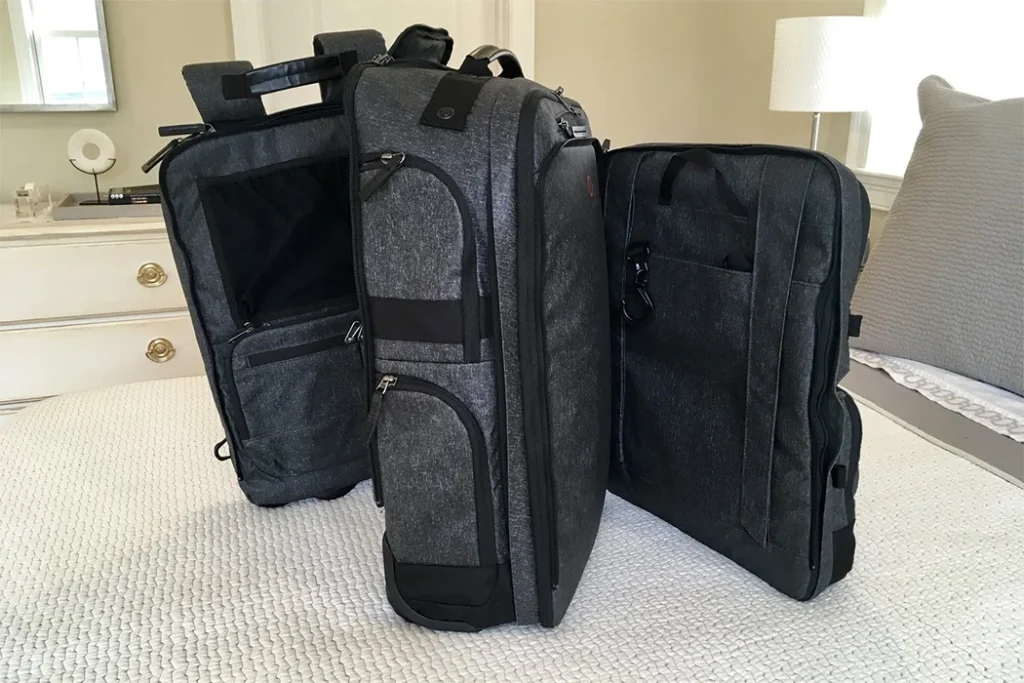
The one-bag philosophy underlies every serious digital nomad budget packing strategy.
The premise is straightforward: fit everything you need — clothes, tech, and toiletries — into one carry-on backpack. Get this right, and you never pay checked-baggage fees again.
Selecting a bag that suits your budget
To get started, you don’t need a $300 premium travel pack. Within the $60–$120 range, there are plenty of solid options that work just as well for most nomads.
Here is what to look for:
| Feature | Why it matters |
|---|---|
| 25–40L capacity | Fits under most airlines’ carry-on limits |
| Laptop sleeve (fits 15″) | Protects your most expensive tool |
| Clamshell opening | Easy airport security access |
| Hip belt or chest strap | Comfort on long travel days |
| Water-resistant fabric | Protects gear in sudden rain |
Don’t purchase the largest bag that still counts as carry-on. A 40L bag that is half full is no smarter than a well-packed 30L bag.
The budget bag shortlist
Osprey, Tortuga, and Amazon Basics all have excellent options. If budget is tight, look for last-season models — they sometimes go 30–50% off.
Tip 2: Build a lean tech kit that works
Your laptop is your livelihood. But beyond that, most tech you pack as a digital nomad either lives in the bag or gets swapped out within a few weeks for something local at a lower price.
Be ruthless here.
The core tech every remote worker needs
Must-haves:
- Laptop (your primary work machine)
- Universal travel adapter (one good unit covers 150+ countries)
- Portable USB-C hub (replaces three separate adapters)
- Noise-canceling earbuds or headphones (for calls and focus)
- Portable power bank (10,000 mAh is the sweet spot)
Skip for now:
- Dedicated webcam (most calls are done with your laptop camera)
- Full-size keyboard (you adapt to a new one within 2–3 days)
- External monitor (nice, but heavy — rent one instead)
- Printer (genuinely never needed on the road)
The hidden cost of too much tech
Each additional tech item is not only a weight issue. It is a cable issue, a charger issue, and ultimately a breakage problem. Instead of four separate adapters, bring one multi-port charger. If you have a newer MacBook, pack a USB-C hub instead of using separate dongles. Consolidate, and you’ll have a light, affordable tech kit.
Tip 3: Follow the climate-conscious capsule wardrobe
Where most new digital nomads overspend is clothing. They pack for every conceivable weather event — and then find themselves hauling clothes they never wear.
A capsule wardrobe fixes this.
What is a capsule wardrobe?
A capsule wardrobe is a small, curated collection of clothing where each item works with every other item. You can mix and match freely, and everything gets worn.
For a budget digital nomad, aim to pack only 7–10 clothing items total:
| Item | Quantity | Budget pick |
|---|---|---|
| Quick-dry t-shirts | 3 | Uniqlo DRY-EX or similar |
| Lightweight pants (convertible) | 2 | REI Sahara or budget equivalent |
| Underwear (merino or synthetic) | 4 | ExOfficio or similar |
| Lightweight jacket or hoodie | 1 | Packable windbreaker |
| Shoes (versatile, walking-friendly) | 1 pair | Clean sneakers or trail runners |
| Flip flops or sandals | 1 pair | Simple and light |
That is it. Skip the “just in case” jacket. Don’t pack dress shoes for an occasion that may never come.
The budget angle: merino wool vs. synthetic
Merino wool products are pricey upfront (often $40–$80 per shirt), but they’re odor-resistant, meaning you wash them less, they last longer, and you replace them less often. For those on a tighter budget, synthetic quick-dry fabrics are a great alternative and cost 50–70% less.
Tip 4: Toiletries — the minimalist system that could save you baggage fees
Here’s a truth most travel guides skip: toiletries get heavy and expensive, fast.
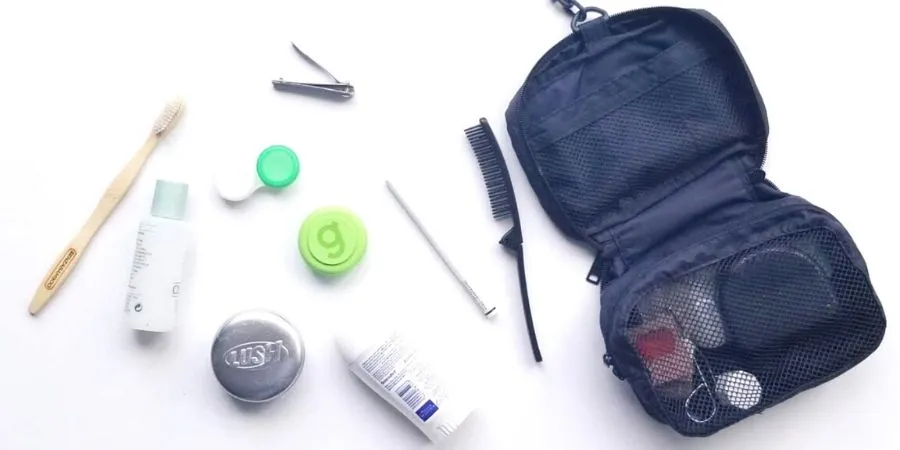
A regular-sized shampoo, conditioner, face wash, sunscreen, and moisturizer can push your bag over carry-on liquid limits and add 1–2 kg of unwanted weight.
The 3-1-1 rule and how it helps you save money
The TSA’s 3-1-1 liquids rule (containers no larger than 100ml, all packed inside a single quart-sized clear bag) might sound restrictive — but it’s actually a built-in budget discipline tool. When you’re limited to 100ml of each product, you’re forced to:
- Consolidate to fewer products
- Use cheaper travel-size containers per trip
- Buy locally once your small supply runs out (often cheaper in Southeast Asia, Latin America, and Eastern Europe)
The solid product switch
Solid shampoo bars, solid conditioner bars, and solid sunsticks sidestep the liquid rule altogether. They last longer, weigh less, and are increasingly available in budget-friendly versions at drugstores.
One good solid shampoo bar lasts 50–75 washes — that’s two to three full bottles of liquid shampoo. For long-term nomads, those savings add up fast.
Tip 5: Pack for laundry, not length of trip
This is one of the most underused digital nomad budget packing tips, and it completely shifts your mindset about clothing.
The core insight
You don’t need one shirt for every day. You need enough shirts to reach your next chance to do laundry.
Most nomads do laundry every 3–5 days. Drop-off laundry services in Southeast Asia, Eastern Europe, and Latin America typically charge $1–$3 per kilogram — far cheaper than hauling a week’s worth of extra clothes.
Once you internalize this, you’ll see that 3–4 shirts are enough instead of 7.
Quick-dry fabric changes the math
Quick-dry clothing can be hand-washed in a hostel or Airbnb bathroom sink and dried overnight. This means:
- Your packing count drops even further
- You’re never waiting for laundry services
- You pay very little — or nothing — for laundry
Invest in three or four quality quick-dry shirts to rotate through. The payoff compounds with every trip.
Tip 6: Build your digital nomad packing list budget-first
If you pack without a checklist, that’s how you end up buying the same things multiple times at destination prices.
A personal master checklist prevents those $15 airport charging cables, the $20 “I left my power bank at home” regrets, and the $30 jacket you bought because you forgot yours.
How to build your checklist
Keep your checklist in a digital note — Google Keep, Notion, or Apple Notes all work. Write down everything you pack, then at the end of each trip note what you never used.
After two or three trips, you’ll have a realistic, distilled sense of exactly what you need.
The two-week rule
If you haven’t used an item at all within two weeks of a trip, strike it from your checklist permanently. It’s dead weight on every trip after this one.
Tip 7: Get the right gear at the right price
One of the biggest budget pitfalls for new digital nomads is buying all their gear before they’ve even taken their first trip. They spend $800–$1,200 on equipment they later discover they didn’t need.
The phased gear approach
Before trip 1: Buy only the absolute essentials — a good bag, a universal adapter, and a power bank. For everything else, use what you already own.
After trip 1: Now you know exactly what you actually missed. You can buy with real experience, not fear.
Trip 3 and beyond: Your kit is dialed in. If certain items got the most use or showed wear, upgrade them now.
This method saves most nomads $300–$600 compared to buying everything upfront.
Where to get budget gear
| Source | What to find | Savings |
|---|---|---|
| Amazon Warehouse Deals | Open-box electronics | 20–40% off |
| REI Outlet | Outdoor and travel clothing | 30–60% off |
| Decathlon | Budget-friendly outdoor gear | 50–70% cheaper than premium |
| Facebook Marketplace | Second-hand backpacks | 40–70% off |
| Local markets at destination | Clothing replacements | Often 80%+ cheaper |
The smartest move is often simply buying clothing locally at your destination. A quick-dry shirt that sells for $35 at an outdoor retailer at home will likely be $4–$8 in Bangkok or Medellín.
Tip 8: Protect your gear without paying a premium
Losing a laptop on the road can erase weeks of income. But comprehensive travel insurance policies that include electronics coverage can run $150–$400 per month — a substantial chunk of a nomad’s budget.
Smarter gear protection on a budget
- Check your credit card first. Many travel-focused credit cards include purchase protection and travel insurance. Call your card provider and ask specifically about electronics coverage.
- Always use a laptop sleeve. A neoprene sleeve ($15–$25) prevents most physical damage. A cracked screen from a drop is a $200–$400 repair — this is the highest-ROI item in your bag.
- Use a combination cable lock. Most co-working spaces and coffee shops have cable anchor points. A $12 cable lock secures your laptop while you step away.
- Back up constantly. Use a cloud backup service. If someone steals your laptop, your data survives. Data loss is far more costly than the hardware itself.
For basic coverage, check out World Nomads. They offer flexible short-term policies from around $45–$80 a month depending on destination and coverage level — significantly less expensive than most full-coverage travel insurance plans.
The golden rule
Don’t bring anything to a café or co-working space that you’d be devastated to lose. Wherever possible, leave expensive gear locked at your accommodation.
How these 8 tips complement one another
These tips shouldn’t be used in isolation — they build on each other.
Pack light (Tip 1) and you skip baggage fees. A lean tech kit (Tip 2) keeps your bag under weight. A capsule wardrobe (Tip 3) combined with quick-dry fabrics (Tip 5) means you never need to check luggage on longer trips. A checklist (Tip 6) means you never waste money replacing forgotten items.
Each of the eight tips leads to the same outcome: spend less, carry less, and work better.
Common mistakes to avoid
- Packing “just in case” items. If you’re packing something for a specific unlikely scenario, leave it. You can buy almost anything, almost anywhere.
- Investing in expensive gear before your first trip. Start cheap. Upgrade once you know what you actually use.
- Forgetting your destination’s climate. A light rain jacket won’t cut it during monsoon season. Check the weather for your specific travel dates.
- Ignoring airline carry-on dimension rules. Weight limits get the most attention, but budget airlines in Europe and Asia strictly enforce dimension limits. Measure your bag before you leave home.
- Taking cables and chargers without an organizer. A $6 cable roll or small pouch keeps your tech kit from becoming a tangled mess.
Quick reference summary
| Tip | Core action | Estimated savings |
|---|---|---|
| One-bag rule | Carry-on only | $500+/year in baggage fees |
| Lean tech kit | USB-C hub, one charger | $50–$100 in replacement gear |
| Capsule wardrobe | 7–10 items total | $200–$400 in unused clothing |
| Minimal toiletries | Solid products + 100ml liquids | $30–$60 per trip |
| Pack for laundry | 3–4 shirts + quick-dry | $100–$300 less luggage |
| Master checklist | Digital packing list | $50–$150 in forgotten items |
| Phased gear buying | Buy after experience | $300–$600 upfront savings |
| Smart gear protection | Card coverage + sleeve + backup | $100/month in repair costs |
FAQ: Digital nomad budget packing tips
Q: What’s the best size for a budget backpack for a digital nomad?
The sweet spot is a 30–35L backpack for most nomads. It fits in overhead bins of budget airlines, carries enough for a 2–4 week trip with quick-dry clothing, and won’t destroy your back on long travel days. You don’t need to spend more than $80–$120 for a solid bag.
Q: How many outfits do I really need for a month-long trip?
With quick-dry clothing and laundry every 3–5 days, you can comfortably handle a full month on just three shirts, two pairs of pants, and four changes of underwear. Many seasoned nomads use even fewer items.
Q: Should I invest in merino wool clothing for travel?
Yes, particularly for underwear and base-layer shirts. Merino naturally resists odor, so you wash it less frequently. For longer trips of 6–12 months, the savings on laundry alone — plus the longevity — make the upfront cost worth it. If you’re just starting out, buy one or two key pieces and expand from there.
Q: How can I keep my tech gear within weight limits?
Consolidate aggressively. Replace three adapters with one USB-C hub. Use one universal travel adapter instead of country-specific ones. A good 10,000 mAh power bank handles most needs. Carry cables only for devices you actually use. Weigh your entire tech kit before your first trip — most nomads find it comfortably under 2.5 kg when properly consolidated.
Q: Do I really need travel insurance as a digital nomad?
Yes, but you don’t need the most expensive policy. Check what your credit card already covers first — many cards include emergency medical, trip cancellation, and purchase protection. Fill the gaps with a flexible policy from a provider like World Nomads or SafetyWing. A decent basic policy costs $45–$80/month for most nomads in lower-cost destinations.
Q: Can I just buy everything I forget at my destination?
For most things, yes. Most cities worldwide sell toiletries, basic clothing, phone accessories, and even laptop cables — usually for a fraction of what you’d pay at home. The exception is highly specific technical items or pharmaceuticals. Keep a short “must bring” list for those, and trust that you can find the rest locally.
Q: What is the number one packing mistake most digital nomads make?
Overpacking on the first trip — it’s nearly universal. Most nomads use only about 60% of what they bring on that first journey. That’s exactly why the phased gear approach matters: let real experience, not fear, dictate what you carry.
The takeaway: packing light is a skill you develop
No one packs perfectly on their first trip. And that is completely fine.
The purpose of these digital nomad budget packing tips is not perfection — it’s progress. With every trip, you discover more about what you actually use, what sits dormant at the bottom of the bag, and what you wish you’d brought instead.
Your bag becomes lighter over time. Your costs go down. Your trips get better.
Start with the one-bag rule. Build your lean tech kit. Create your capsule wardrobe. Track what you use. And buy gear based on experience, not fear.
The ultimate nomad packing setup is just a few trips away. Start building it now.
This article is for general informational purposes only. Product prices and airline policies are subject to change — always confirm the latest rules with your particular airline before traveling.