There’s a moment every digital nomad remembers — standing in a new country, suitcase open, realizing they either packed too much… or the wrong things.
It usually happens after a long flight, when your back hurts from carrying unnecessary weight, your charger isn’t compatible, and your Wi-Fi barely works. That’s when you understand something important:
Travel gear isn’t about having more — it’s about having the right things.
If you get your gear right, your life becomes easier, lighter, and cheaper. If you get it wrong, even the most beautiful destinations start to feel inconvenient.
This guide breaks down 7 essential DigitalNomadBudget travel gear picks — not expensive, flashy items, but practical tools that make your work and travel smoother without draining your budget.
1. A Lightweight, Reliable Laptop (Your Mobile Office)
Let’s start with the obvious — your laptop is your income source.
But here’s where many people go wrong: they either overspend on power they don’t need or buy something too cheap that slows them down.
💻 What Actually Matters
- Lightweight (under 1.5 kg ideally)
- Good battery life (6–10 hours)
- Fast enough for your work (don’t overbuy)
- Durable build
📊 Laptop Selection Guide
| Work Type | Recommended Specs | Budget Range |
|---|---|---|
| Writing/Admin | 8GB RAM, basic CPU | $500–$800 |
| Design/Editing | 16GB RAM, mid-high CPU | $900–$1500 |
| Development | 16GB+ RAM, SSD | $800–$1400 |
Real Insight
You don’t need the latest model. You need something that won’t fail when you’re working in a different timezone under pressure.
Budget Shortcut
Buy last year’s model — often 20–30% cheaper with similar performance.
2. Universal Travel Adapter (The Silent Lifesaver)
This is one of those items you don’t think about… until you need it urgently.
Different countries use different plug types, and buying adapters at airports or tourist shops can be surprisingly expensive.
🔌 Why It Matters
- Works in multiple countries
- Saves repeated purchases
- Often includes USB ports
📊 Adapter Comparison
| Type | Price Range | Use Case |
|---|---|---|
| Single-country plug | $5–$10 | Limited use |
| Universal adapter | $15–$40 | Best for nomads |
| Adapter + USB hub | $25–$60 | Multi-device setup |
Shortcut Insight
One good adapter replaces 4–5 cheap ones over time.
3. Portable Power Bank (Because Outlets Are Never Where You Need Them)
You’ll quickly notice something while traveling:
Outlets are always either occupied… or far away.
A power bank isn’t just convenience — it’s insurance.
🔋 When It Saves You
- Long travel days
- Working in cafés
- Unexpected power cuts
- Airport delays
📊 Power Bank Guide
| Capacity | Usage Type |
|---|---|
| 5,000 mAh | Emergency backup |
| 10,000 mAh | Daily use |
| 20,000 mAh | Heavy users / laptops |
Budget Tip
A mid-range 10,000–20,000 mAh power bank is the sweet spot.
Shortcut Insight
Running out of battery during work = lost productivity = lost money.
4. Noise-Canceling Earbuds (Focus Anywhere)
Working in cafés sounds romantic — until someone starts a loud conversation next to you.
Noise is one of the biggest hidden productivity killers.
🎧 Why It Matters
- Improves focus
- Reduces stress
- Helps during flights
📊 Earbuds vs Headphones
| Type | Pros | Cons |
|---|---|---|
| Earbuds | Portable, light | Less powerful |
| Headphones | Better noise cancel | Bulky |
Real Insight
Even budget noise-isolating earbuds can dramatically improve your focus.
Shortcut Insight
You don’t need silence — you just need control over noise.
5. Compact Backpack (Your Daily Survival Kit)
Your main suitcase stays at your accommodation. Your backpack is what you live with daily.
Choosing the wrong one leads to constant discomfort.
🎒 What to Look For
- Lightweight but durable
- Laptop compartment
- Water-resistant
- Comfortable straps
📊 Backpack Features Breakdown
| Feature | Importance Level |
|---|---|
| Laptop protection | High |
| Comfort | High |
| Size (20–30L) | Ideal |
| Waterproofing | Medium |
Budget Tip
Avoid oversized backpacks — they encourage overpacking.
Shortcut Insight
A good backpack reduces daily friction more than you expect.
6. Local SIM or Portable Wi-Fi (Stay Connected Always)
Internet is your lifeline.
Without it, you can’t:
- Work
- Communicate
- Navigate
- Manage finances
🌐 Your Options
- Local SIM card
- eSIM
- Portable Wi-Fi device
📊 Internet Options Comparison
| Option | Cost | Reliability |
|---|---|---|
| Local SIM | Low | High |
| eSIM | Medium | High |
| Portable Wi-Fi | High | Very High |
Real Insight
Local SIMs are usually the cheapest and most reliable.
Shortcut Insight
Never rely on one internet source — always have a backup.
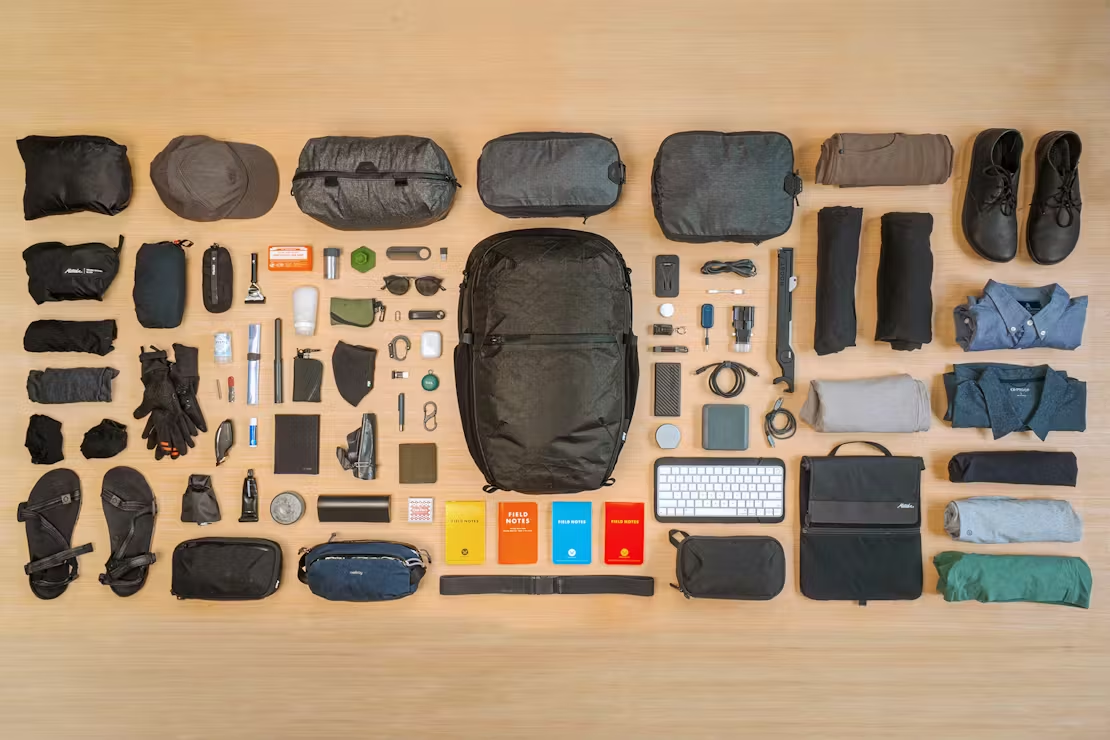
7. Minimal Packing System (The Ultimate Gear Strategy)
This isn’t a product — it’s a mindset.
The more you carry, the more you spend:
- Extra baggage fees
- Transport costs
- Physical effort
🧠 The Rule
Pack less, move easier, live cheaper.
📊 Packing Efficiency Chart
| Packing Style | Cost Impact | Mobility |
|---|---|---|
| Overpacking | High | Low |
| Minimal packing | Low | High |
Practical Tips
- Choose versatile clothing
- Limit “just in case” items
- Reuse and rotate outfits
Shortcut Insight
Every extra item has a hidden cost.
Bonus: Monthly Cost Impact of Smart Gear
Here’s something most people don’t realize — good gear can actually save money over time.
📊 Gear ROI Table
| Gear Item | Monthly Savings Potential |
|---|---|
| Power bank | $10–$20 (café flexibility) |
| Local SIM | $20–$50 |
| Backpack | Reduced transport costs |
| Adapter | Avoid repeated purchases |
| Earbuds | Higher productivity |
Final Thoughts
Travel gear is not about looking like a digital nomad.
It’s about removing friction from your life.
When your setup is simple, reliable, and efficient:
- You work better
- You travel lighter
- You spend less
- You stress less
And that’s the real goal.
Because the best digital nomad setup isn’t the most expensive one.
It’s the one that quietly supports your life in the background — without getting in the way.
FAQs
1. What is the most important gear for digital nomads?
Your laptop is the most important, followed by reliable internet tools and a good backpack.
2. How much should I spend on travel gear?
You don’t need to overspend. A balanced budget of $800–$1500 total can cover essential gear.
3. Is expensive gear worth it?
Only if it improves durability or productivity. Otherwise, mid-range options work perfectly.
4. How can I reduce luggage weight?
Pack versatile items, avoid duplicates, and stick to essentials only.
5. Do I need a portable Wi-Fi device?
Not always. A local SIM is usually enough, but having a backup helps.
6. What is the biggest gear mistake?
Overpacking and buying unnecessary items that add weight and cost.